
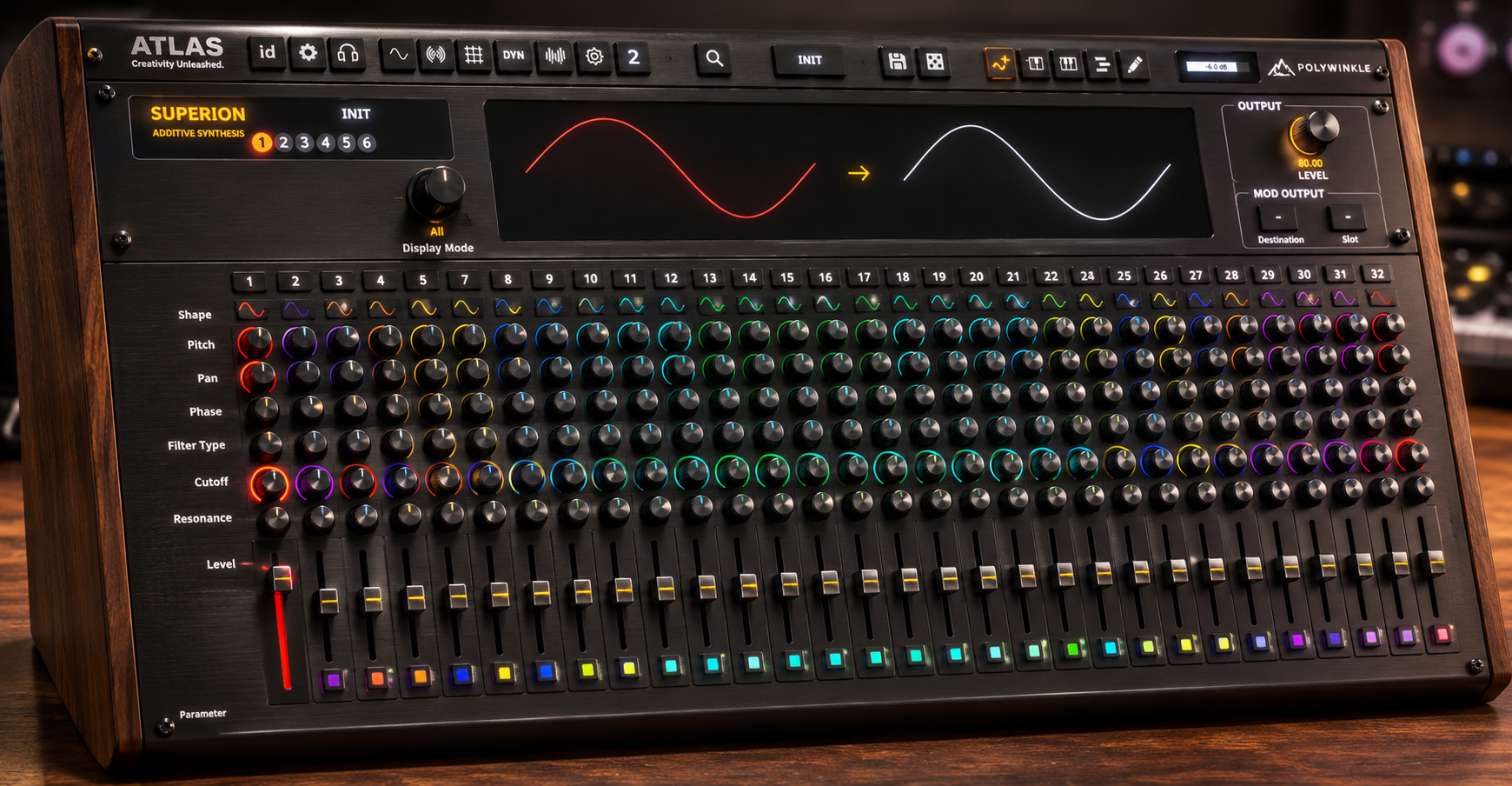
Superion — Dramatized imagery
Blend beyond the familiar
Blend several synthesis modes with distinctive morphing techniques. Six optimized oscillators and granular synthesis give you the raw material to explore sounds you never knew were possible.
Never before has a synth given you so much harmonic, rhythmic, wave-shaping and modulation control as Atlas Supersynth™.
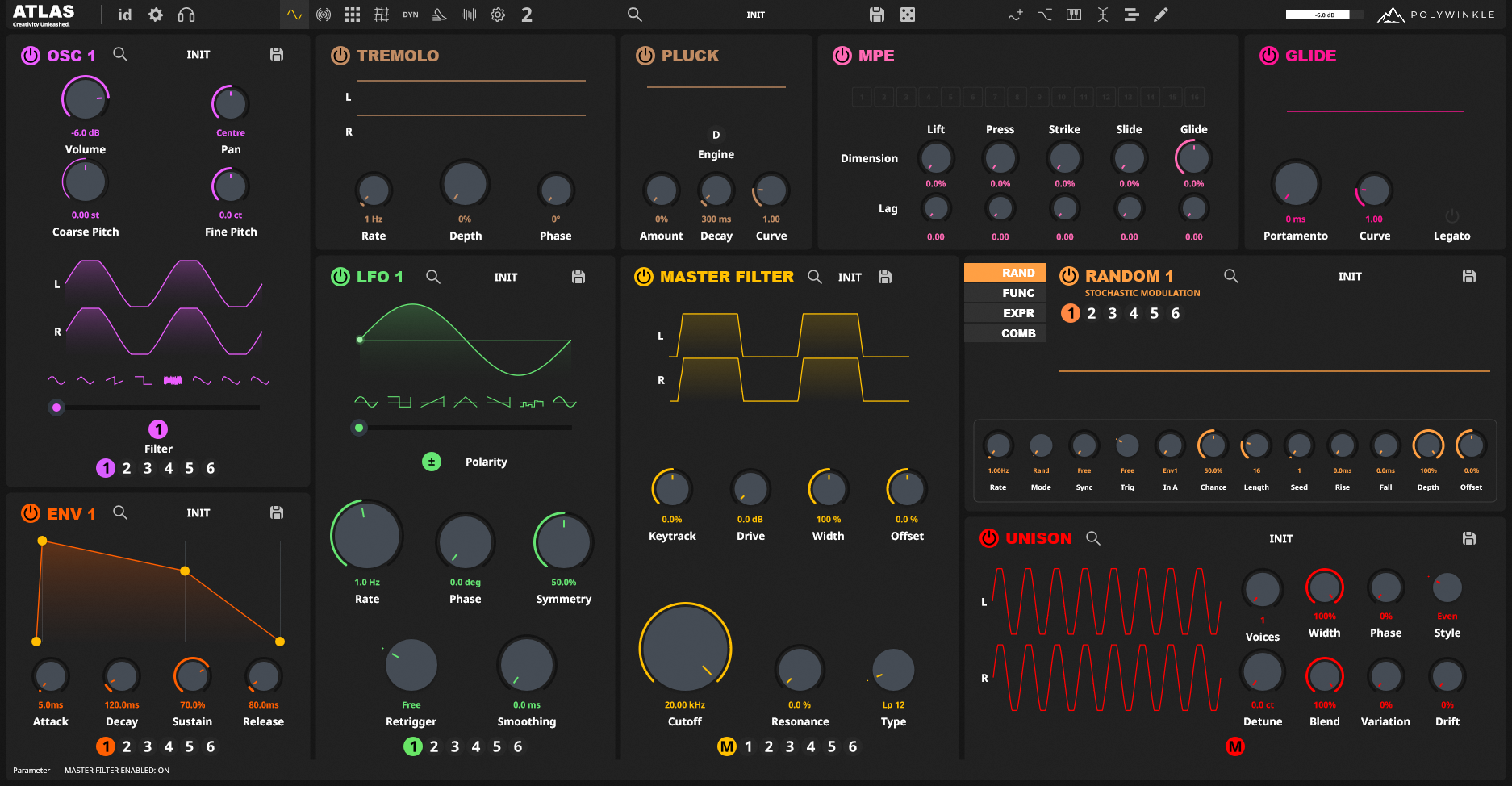
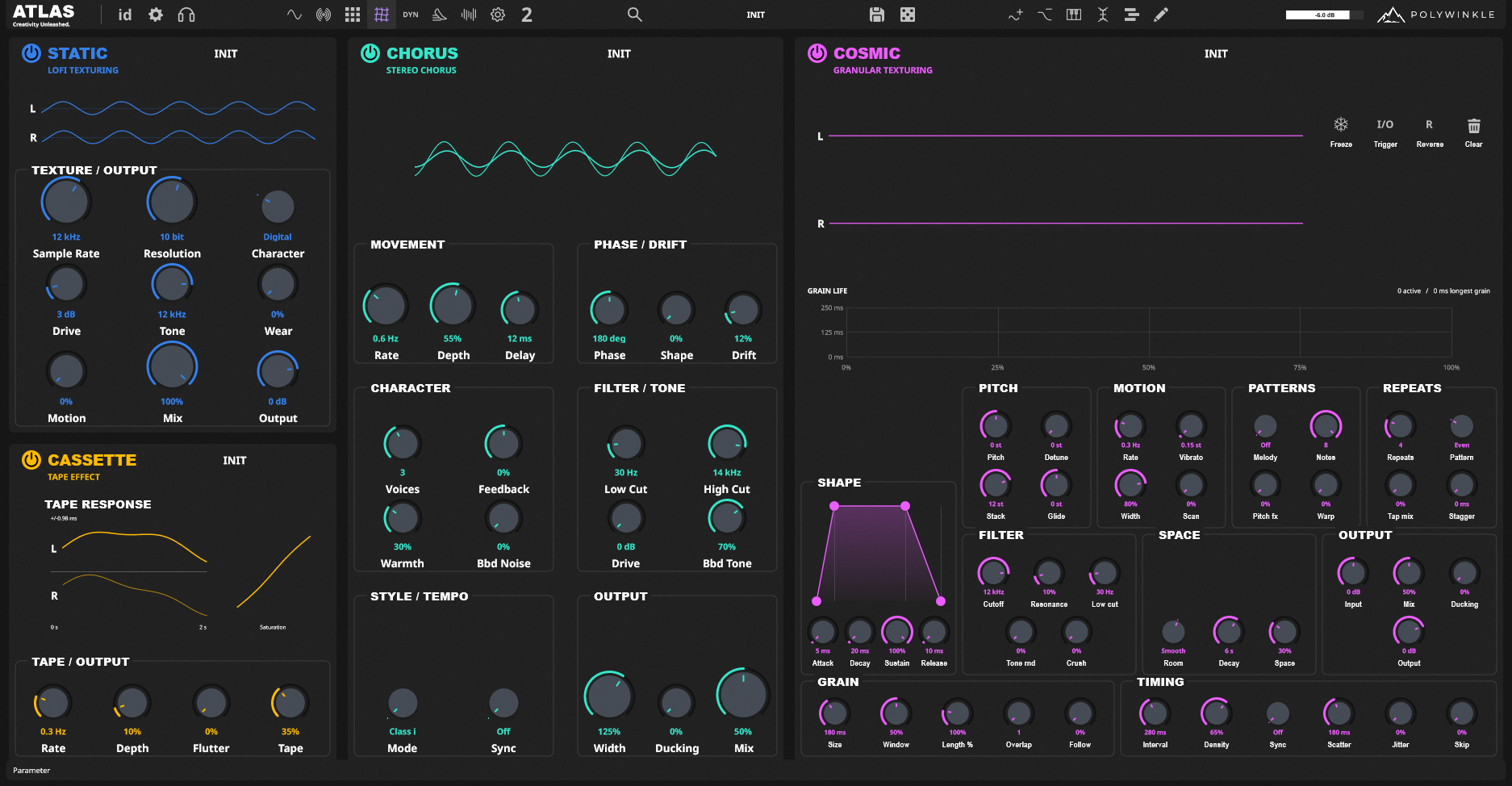
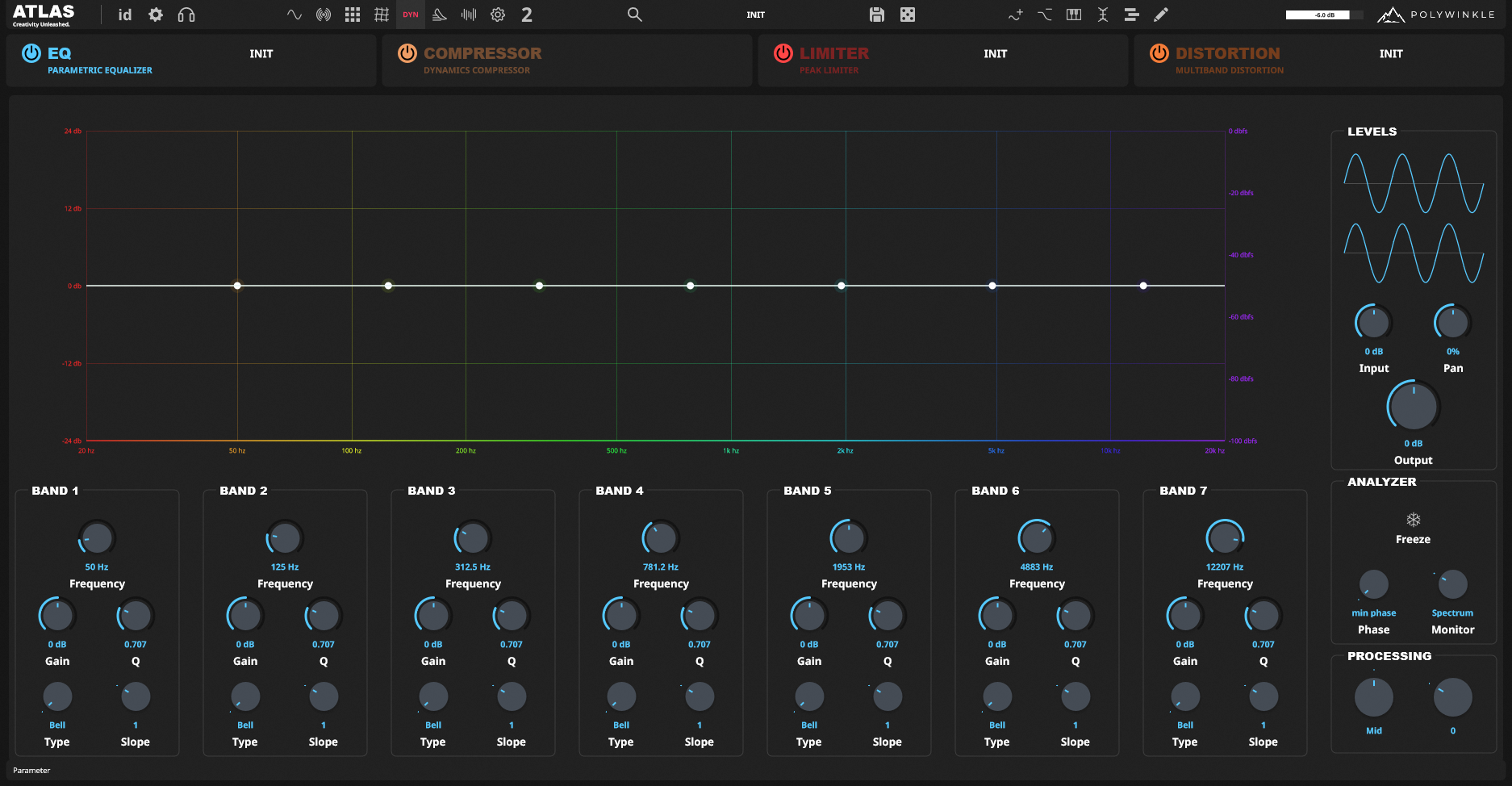
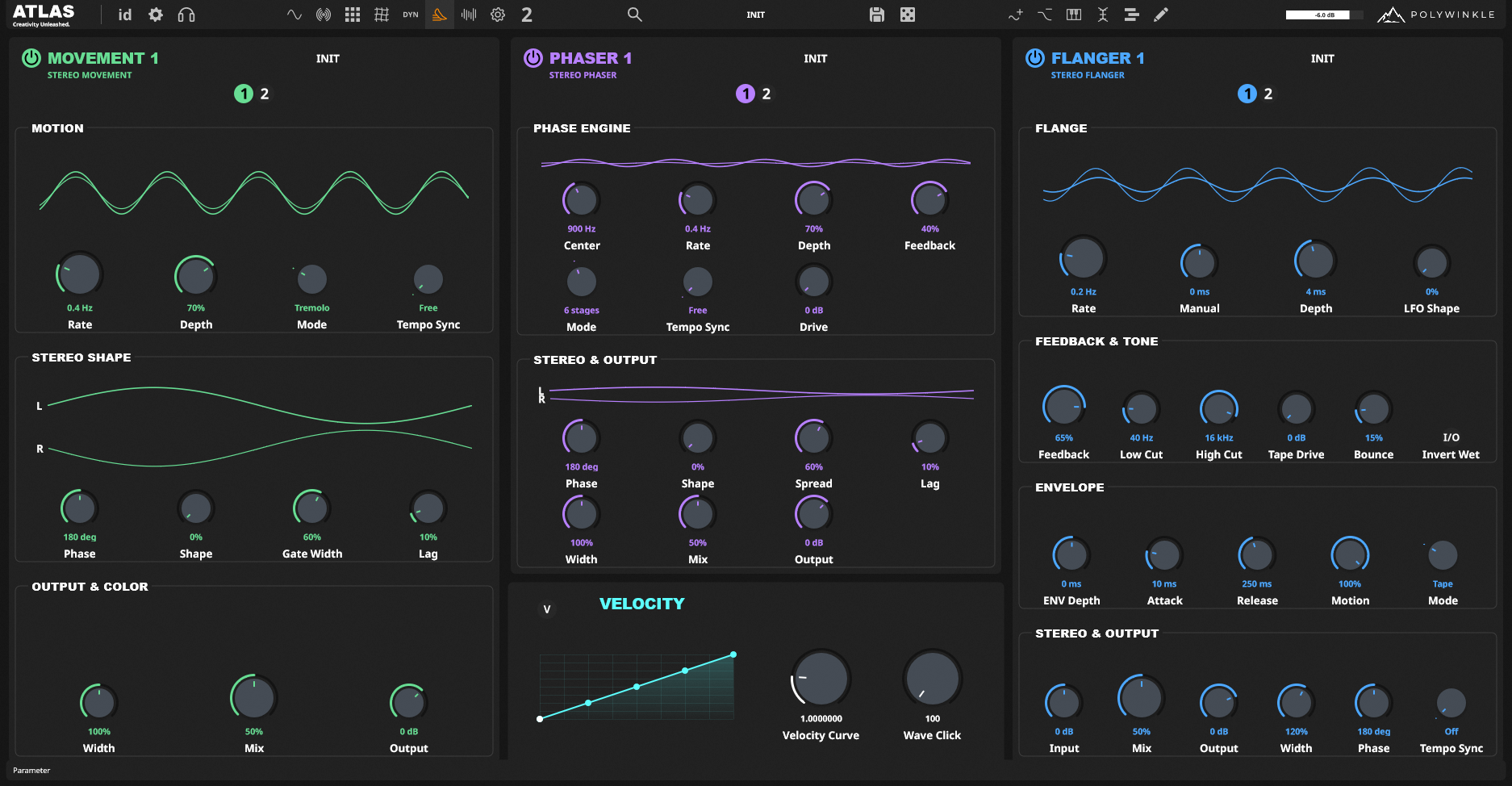
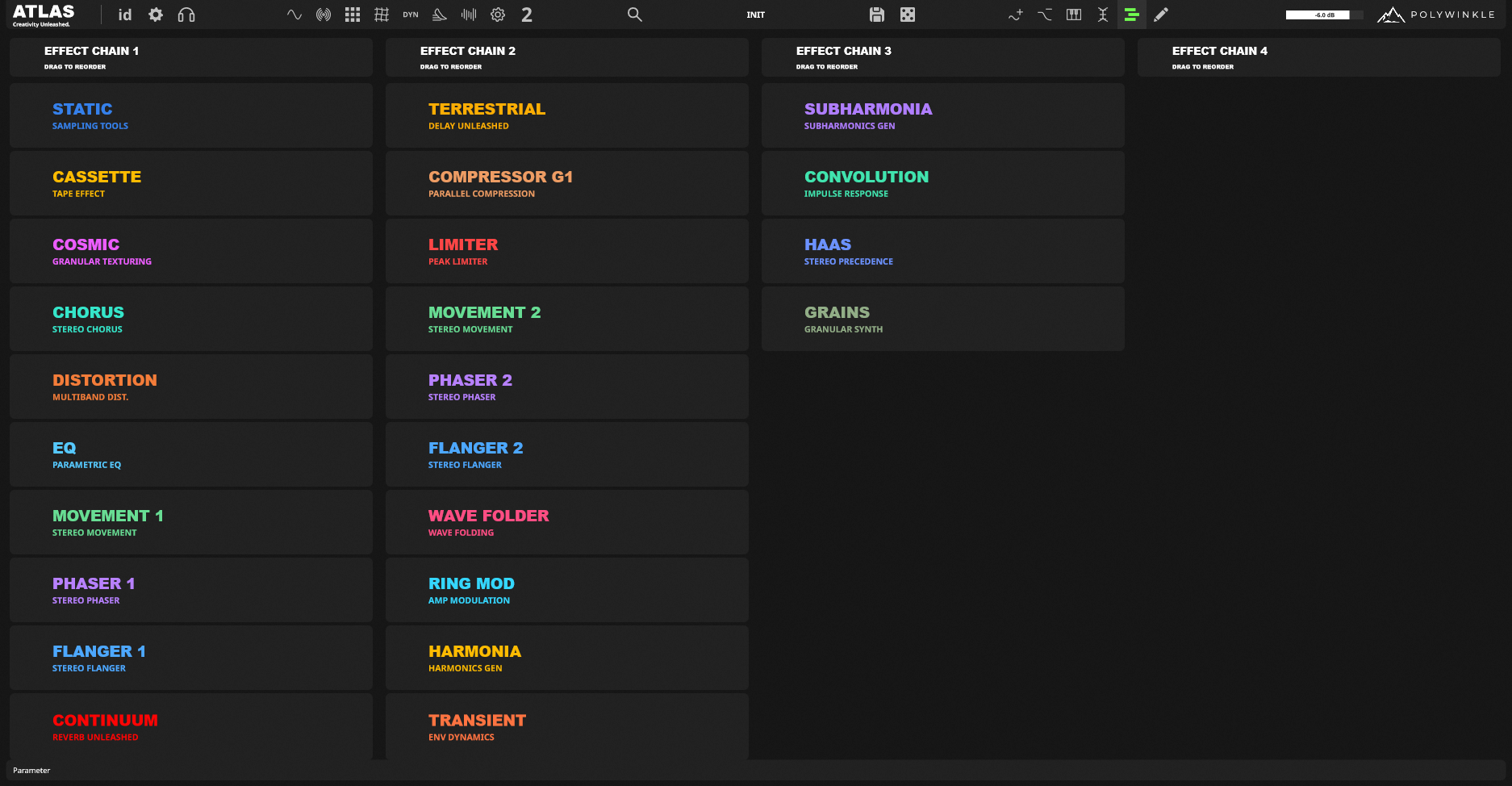
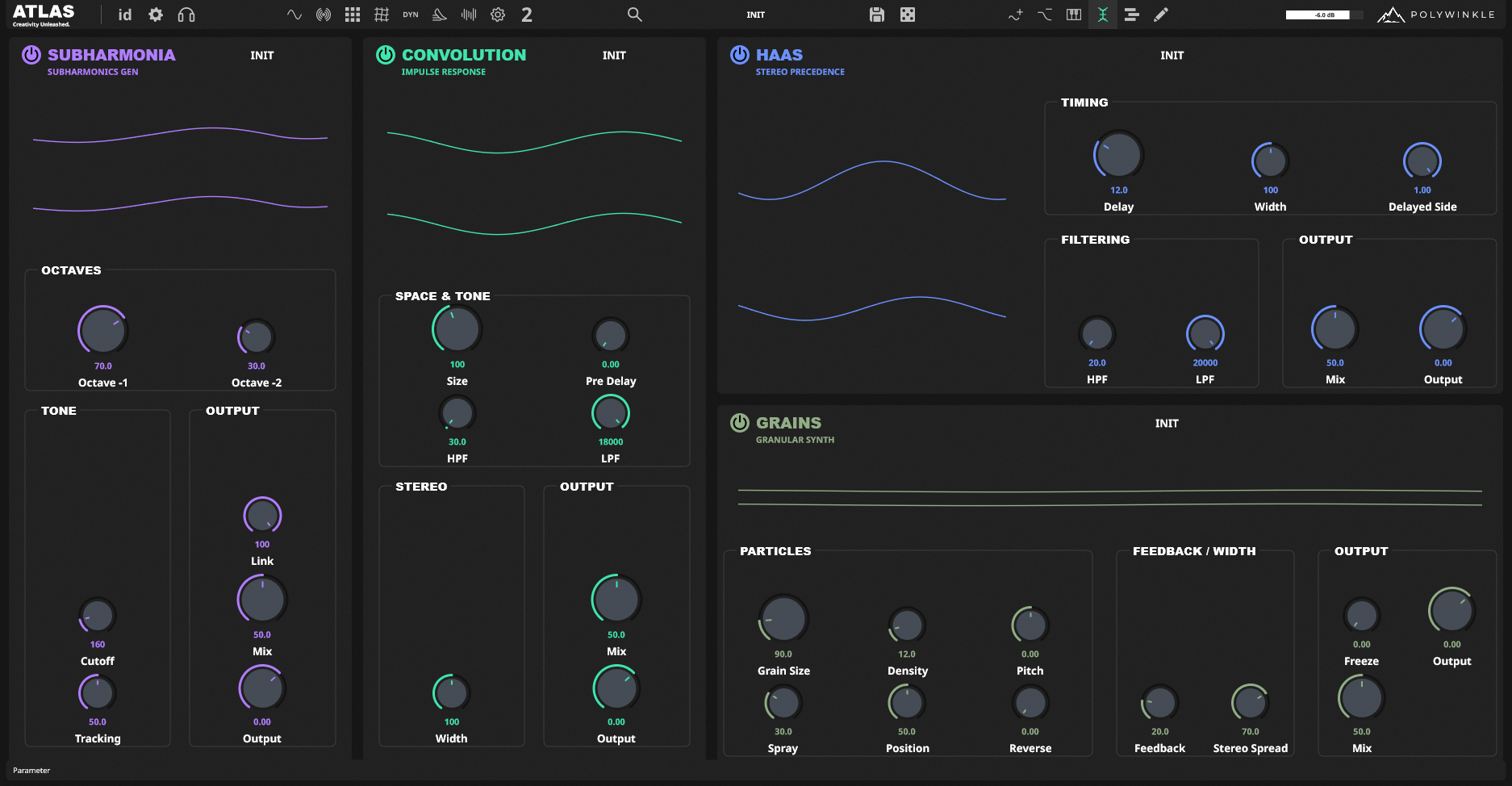
Atlas Supersynth™ is designed for those who want to take their sound to the next level. For deeper basses, richer dynamics, and complete control over the signal before it ever leaves the synth.
Superion — Dramatized imagery
Blend several synthesis modes with distinctive morphing techniques. Six optimized oscillators and granular synthesis give you the raw material to explore sounds you never knew were possible.
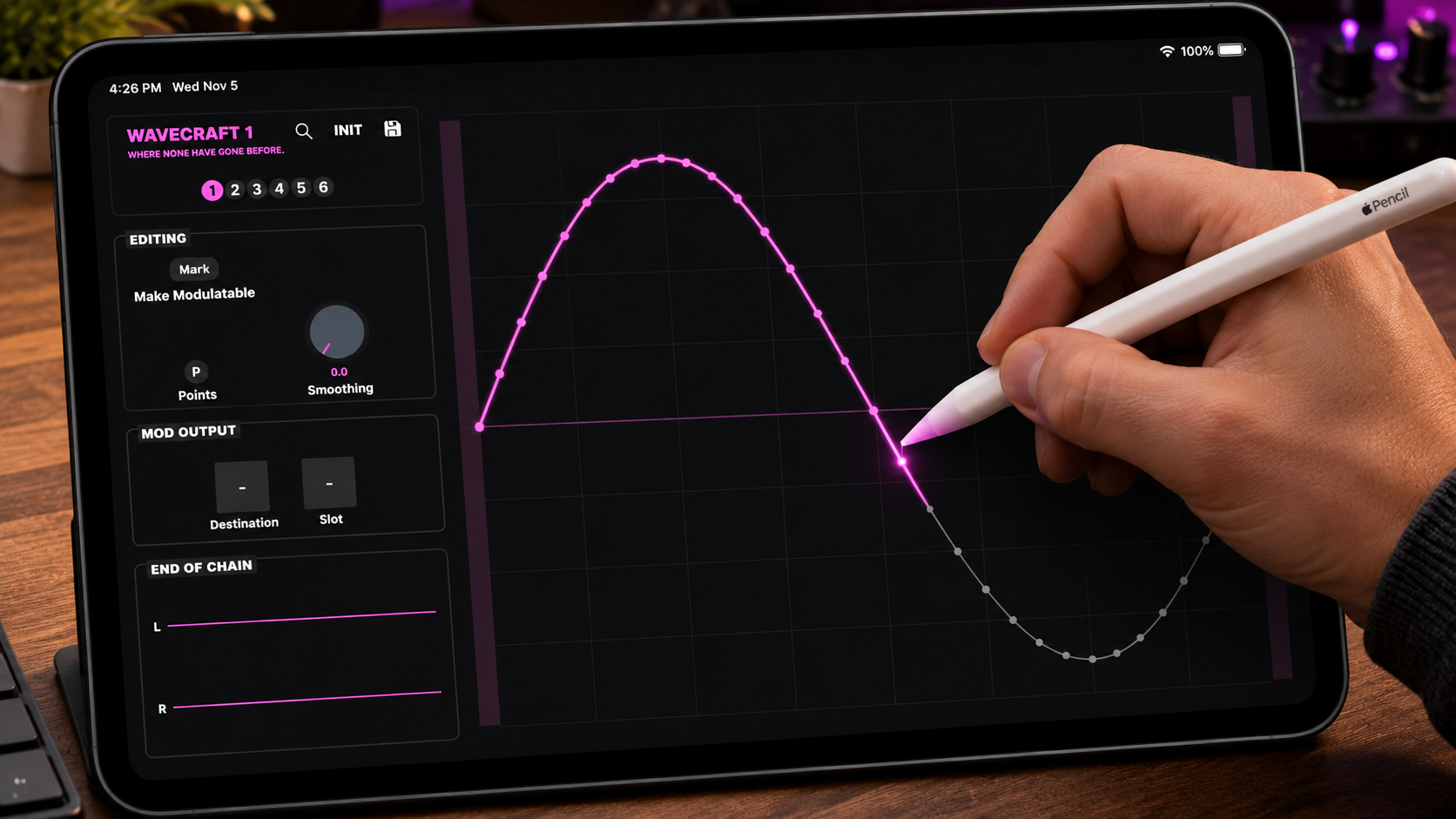
Drawing a waveform in Wavecraft
Draw waveforms directly in Wavecraft and hear how each shape changes the result. Reuse those waveforms across Atlas Supersynth™ to shape a filter, drive an LFO, or control amplitude.
Atlas Supersynth™ movement effects
Combine rhythmic tools with harmonic shaping to create complex overtones, undertones, and evolving patterns. An approachable modulation system keeps intricate movement within reach.
Atlas Supersynth™ dynamics tools
Six filters and six stereo compressor lanes give you detailed control before the signal leaves Atlas Supersynth™. Work with mid/side filter and dynamics controls, then choose the effect order to shape the whole signal path.
Atlas Supersynth™ synthesis controls · Atlas Supersynth™ effect stack · Wavecraft waveform drawing
Combine synthesis modes, draw waveforms, and explore morphing techniques that take a patch beyond its starting point.
Superion — Dramatized imagery
Explore additive synthesis with Superion and subtractive synthesis with Inferion. Combine synthesis modes with morphing techniques, or bring granular textures into your patch.
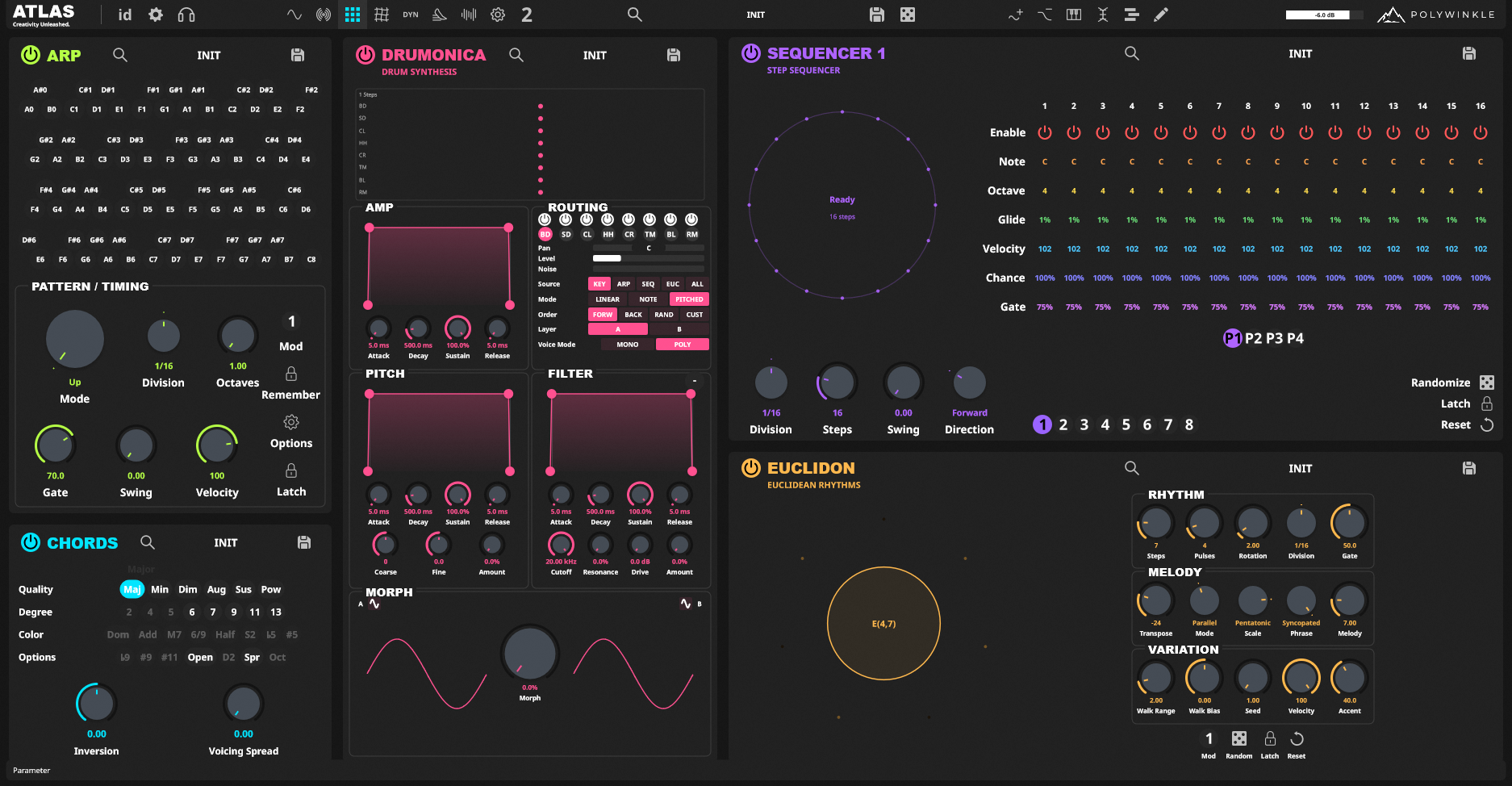
Atlas Supersynth™ rhythm tools
Use rhythmic tools to shape more than the main phrase. Build motion into overtones and undertones for sounds with their own pulse.
Explore 21 effects, including richly featured reverb and delay engines. Choose the effect order and shape tone, space, and dynamics inside the synth.
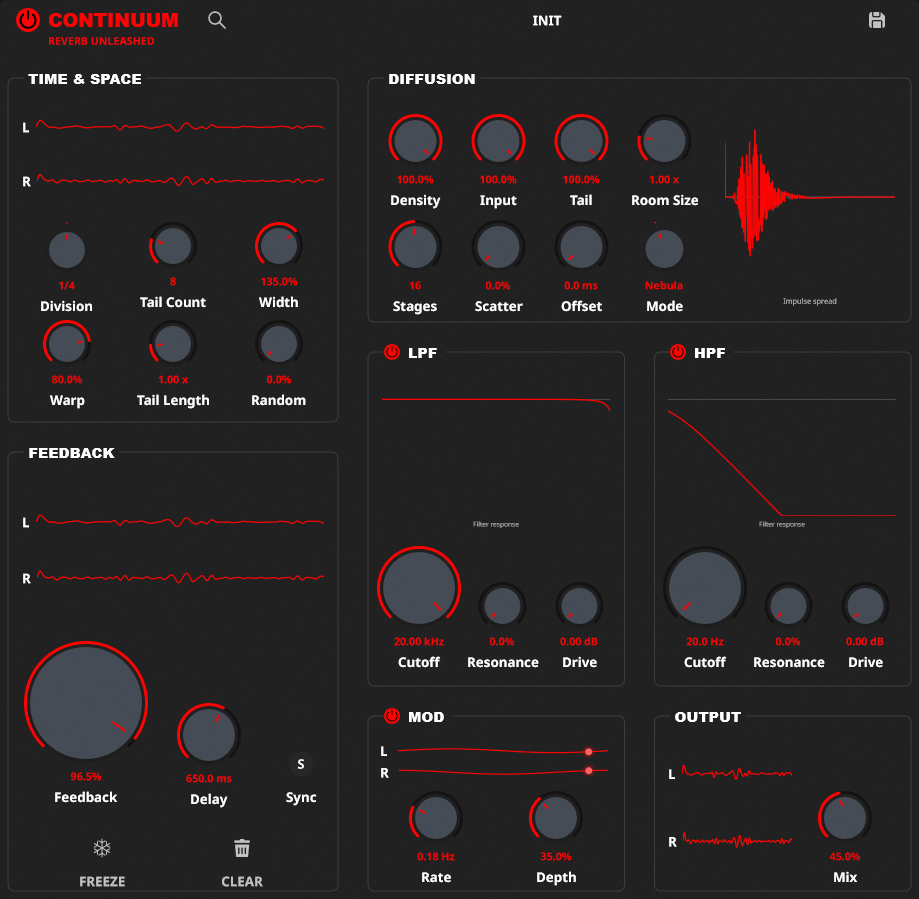
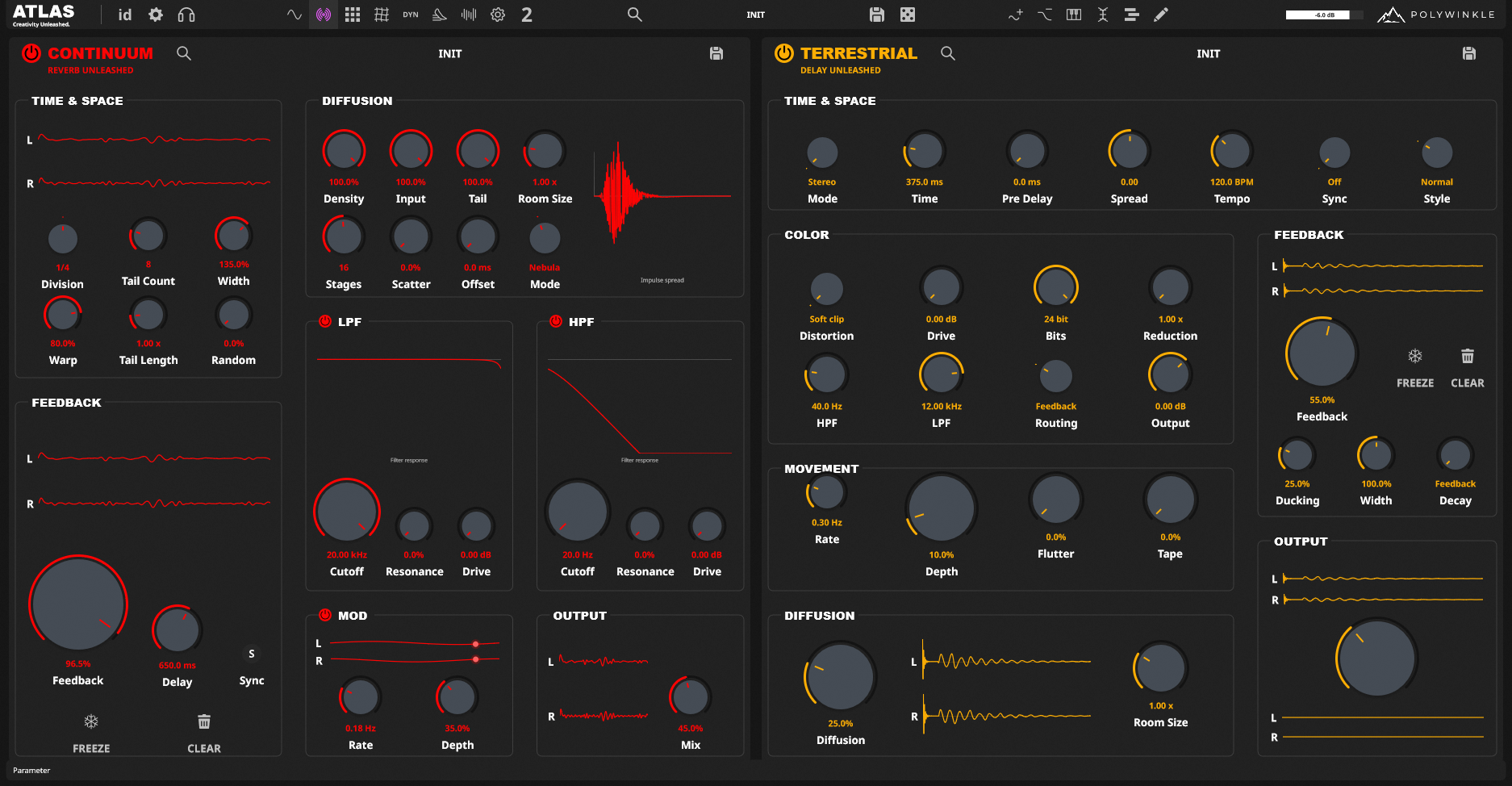
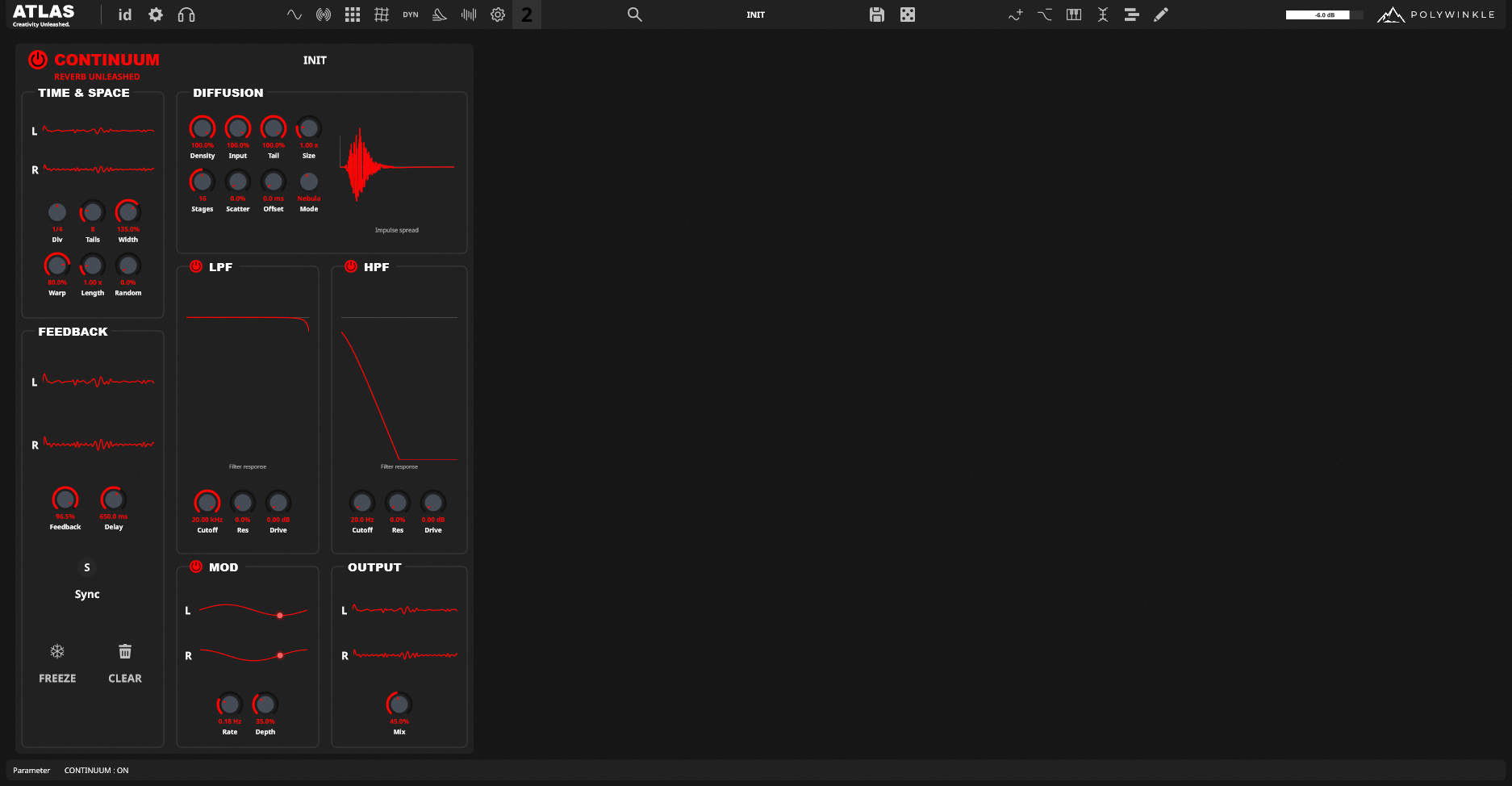
Continuum Reverb
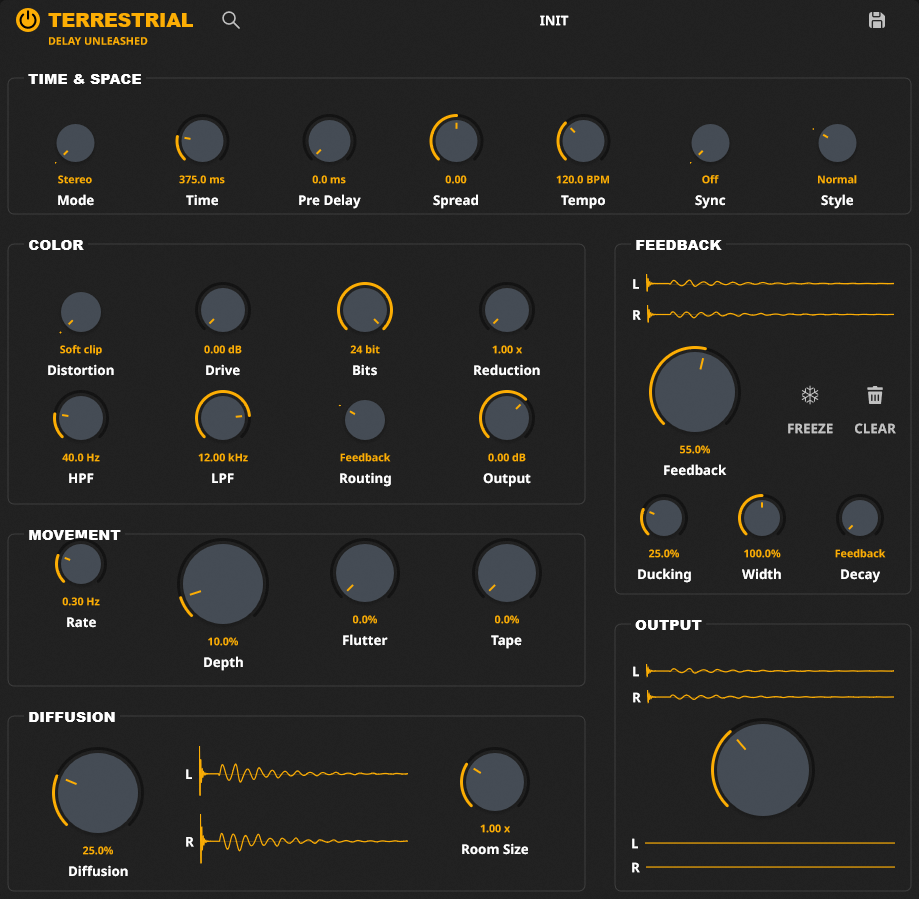
Terrestrial Delay
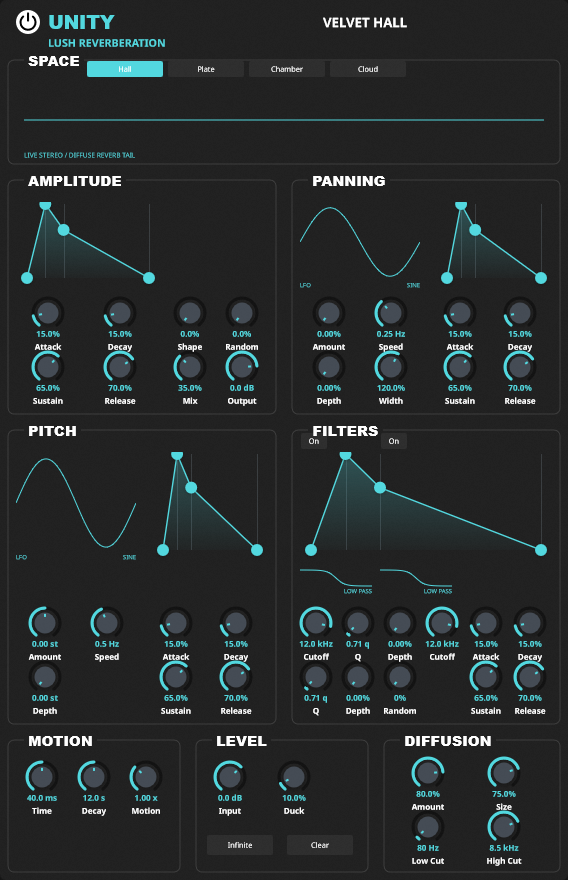
Unity Reverb
Build expressive movement with a deep, approachable modulation system and a broad set of rhythmic and generative tools.
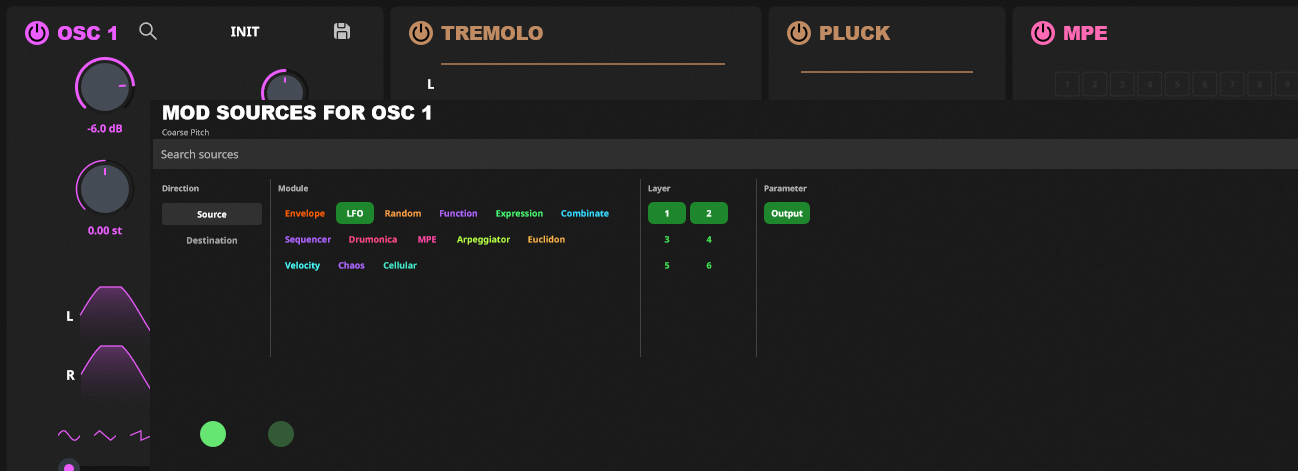
Work with six envelopes, six LFOs, six random generators, six expression generators, six function generators, and six Combinate generators. Use modulators to modulate other modulators, creating interacting layers of movement with detailed control.
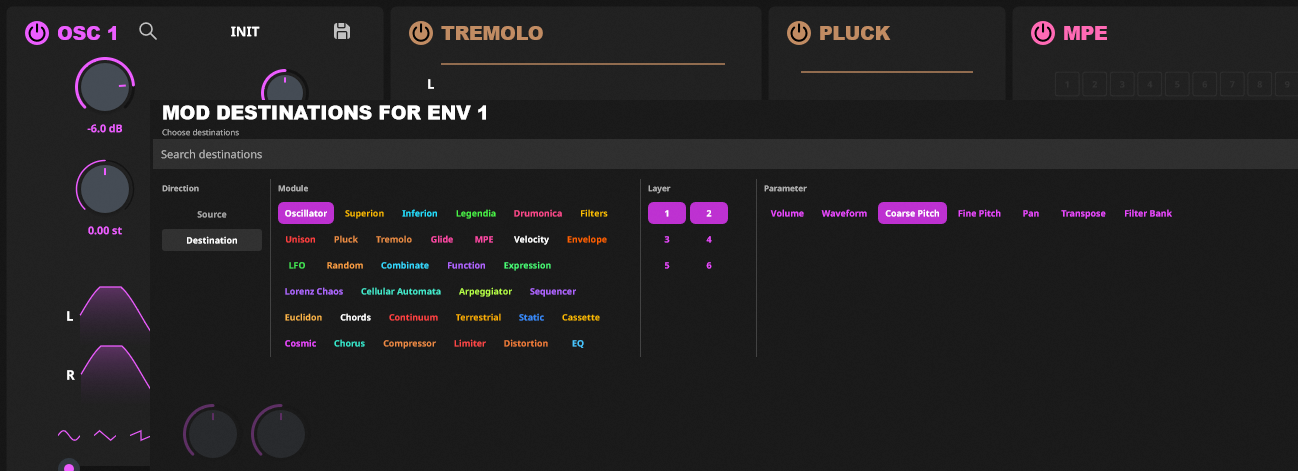
Draw a wave with WaveDraw, then explore it in oscillators, LFOs, filters, and supported pitch-modulation tools. Reusing a shape connects sound and movement; morphing between waves opens up the possibilities in between.
Wave-shaping, throughout Atlas Supersynth™
Wave-shaping in Atlas Supersynth™ goes beyond a slider. Draw your own waves with WaveDraw, reuse interchangeable shapes across the instrument, and morph between several waves to explore the sound and movement between them.
Use WaveDraw to create your own waves instead of choosing only from fixed shapes. Give your sound a contour that starts with your idea.
Interchange waves across oscillators, LFOs, filters, and supported pitch-modulation tools. Explore how the same shape changes the character of a sound, the motion of a modulation, or the way a filter responds.
Morph between several waves rather than settling on one fixed shape. Blend their contours to discover intermediate shapes and evolving wave-shaping possibilities.
Designed by a sound engineer who values deep complexity made simple, Atlas Supersynth™ gives you more control over your creative workflow without overcomplicating it. Shape sounds faster, explore more interesting possibilities, and discover entirely new ways to bring your songs to life.
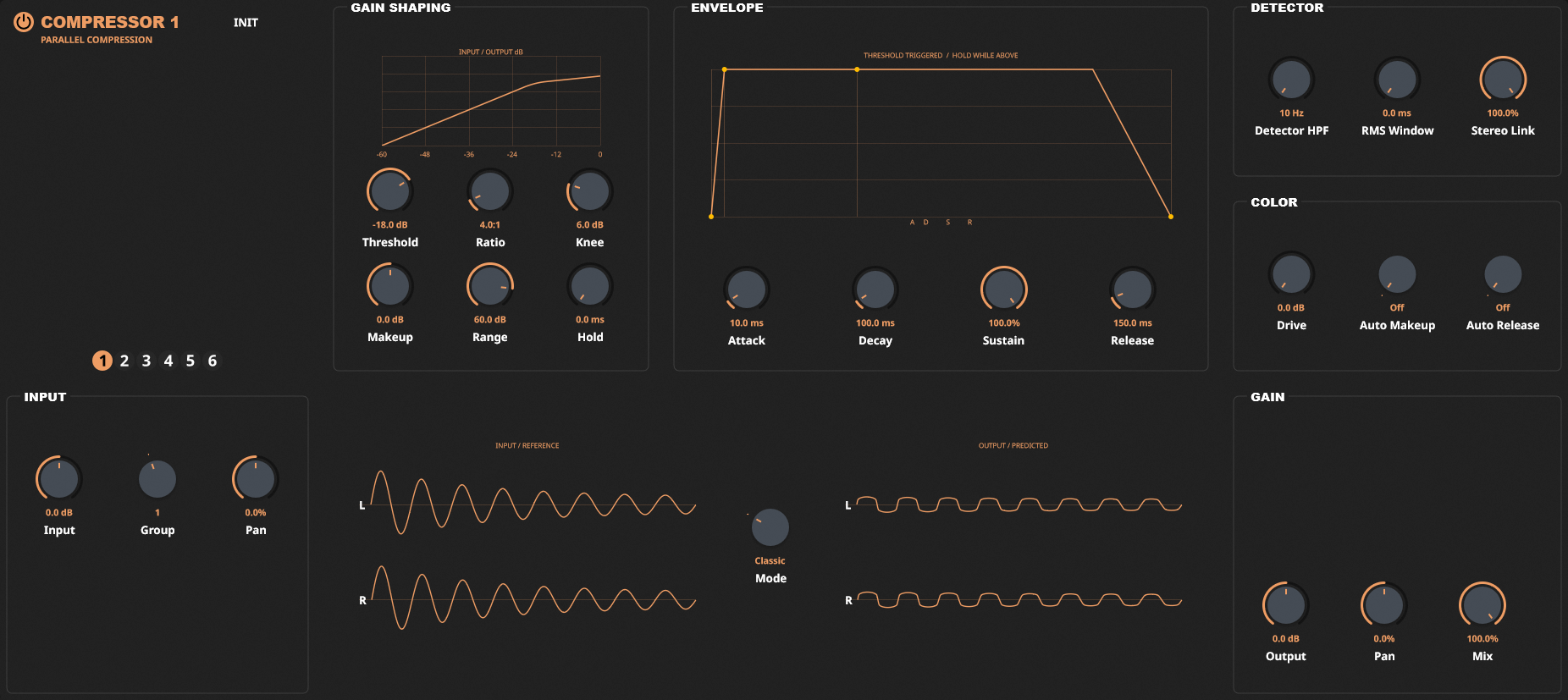
Compressor - dynamics space view
Explore advanced filter routing and mid/side control over filters and dynamics. Shape how filtering affects the signal, choose effect order, and refine the result before it ever leaves the synth.
Continuum Reverb - dynamics space view
Explore richly featured reverb and delay engines as part of your patch. Shape space alongside synthesis, modulation, and dynamics instead of leaving it until the end.
Preview how most effects interact with your waveform as you shape it. Detailed visual feedback helps you understand the changes you are making and the wave you are creating.
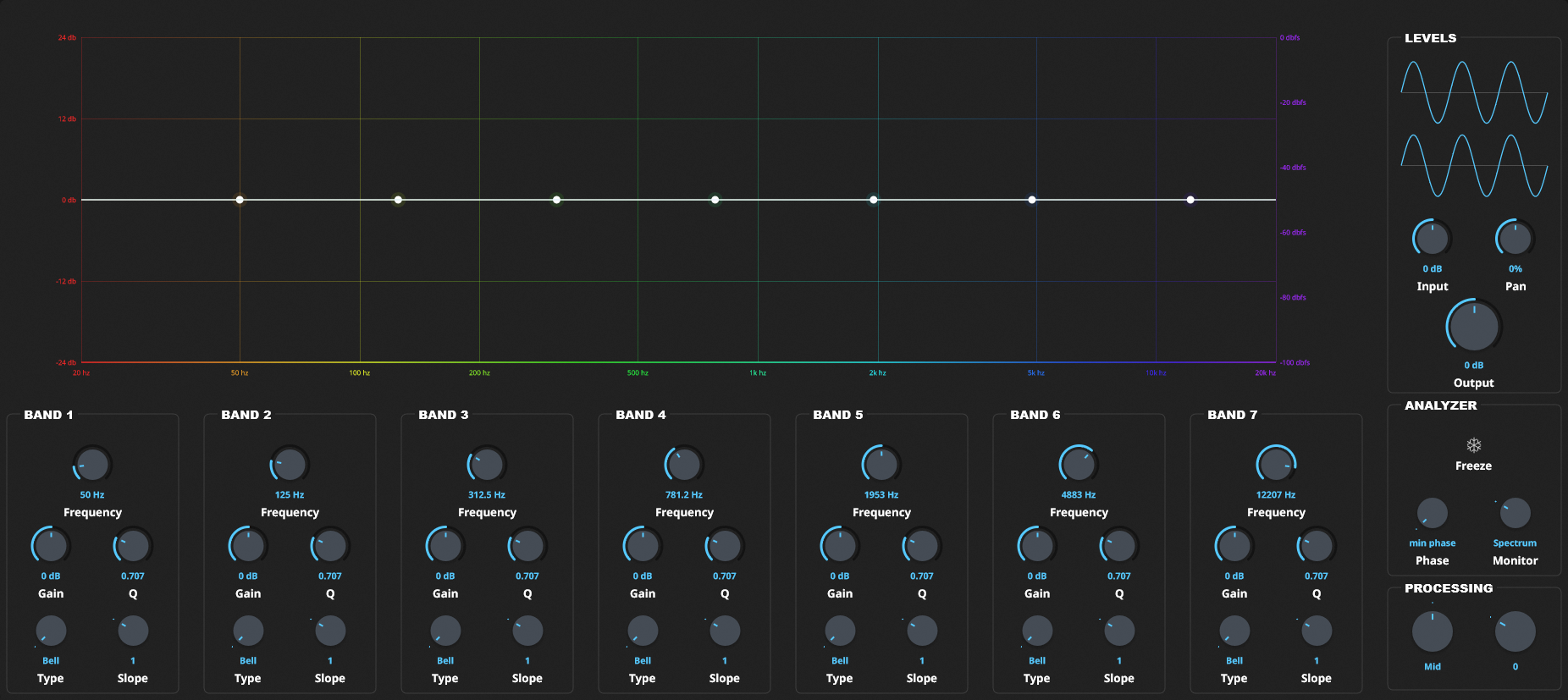
Organized, intuitive tools help you find the controls you need and bring your ideas to life faster. Shape your sound with a workflow designed to make complex tasks feel clear and manageable.
Combine rhythmic movement, harmonic shaping, and reusable waveforms to create sounds that keep evolving.
Keep compatible presets moving between Atlas Supersynth™ and the corresponding standalone plugins, including Continuum Reverb, Wavecraft, Superion, Inferion, and much more. Standalone releases are planned to follow a few weeks after Atlas Supersynth™. Explore the included themes, plugins, and presets across the ecosystem.
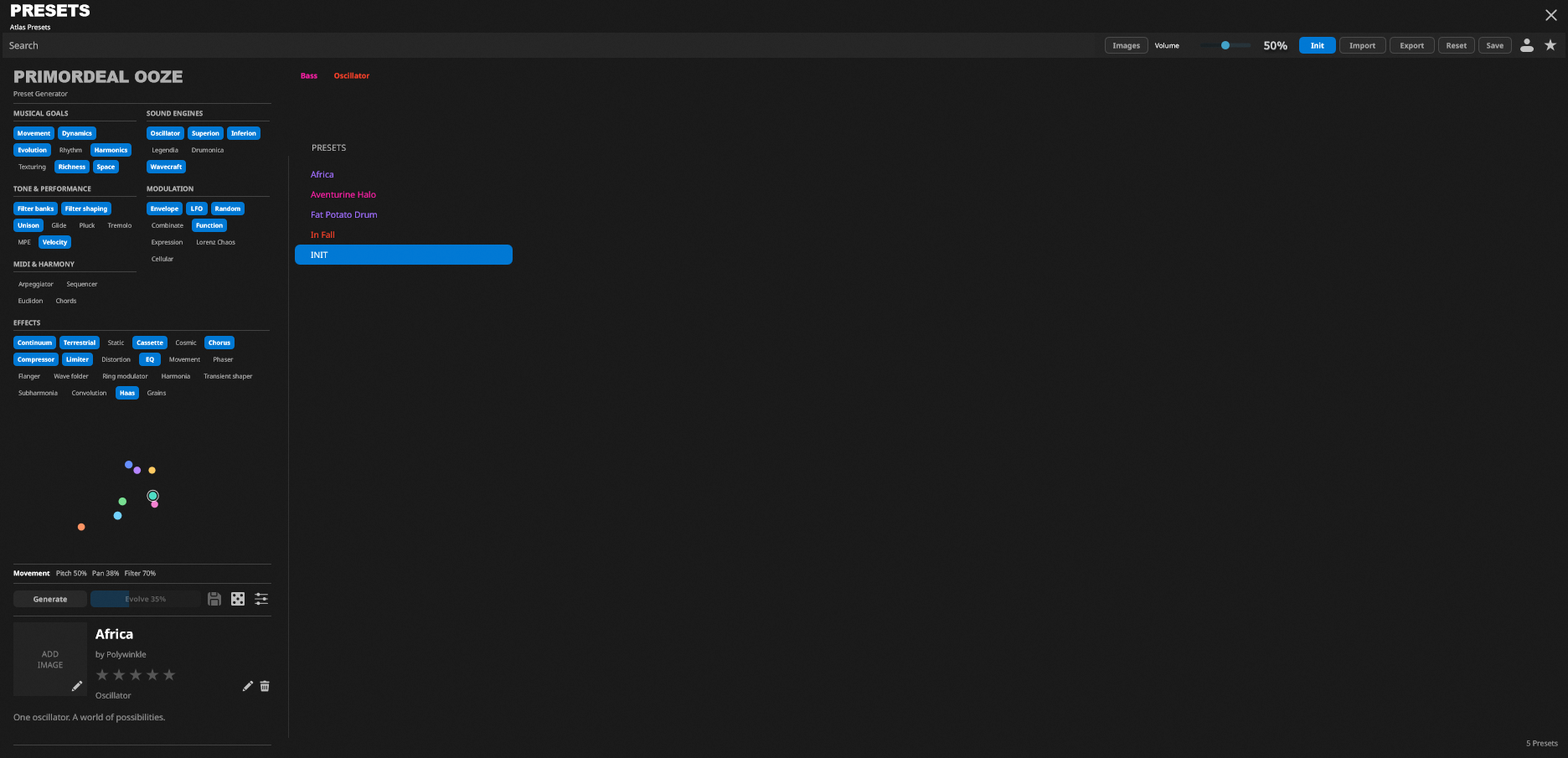
Generate Atlas Supersynth™ presets with Primordeal Oooze. It is the preset generator for the complete instrument. No AI is used in generating presets.
Atlas Supersynth™ stores all its presets in a single file shared across the entire Polywinkle ecosystem. Keep your collection together, with compatible presets available in Atlas Supersynth™ and the corresponding standalone plugins. A Continuum Reverb preset created in Atlas Supersynth™, for example, can also be used in Continuum Reverb standalone.
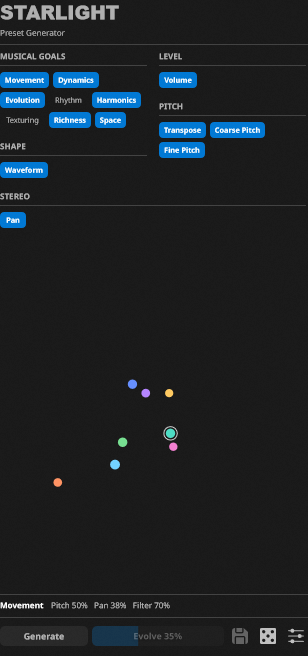
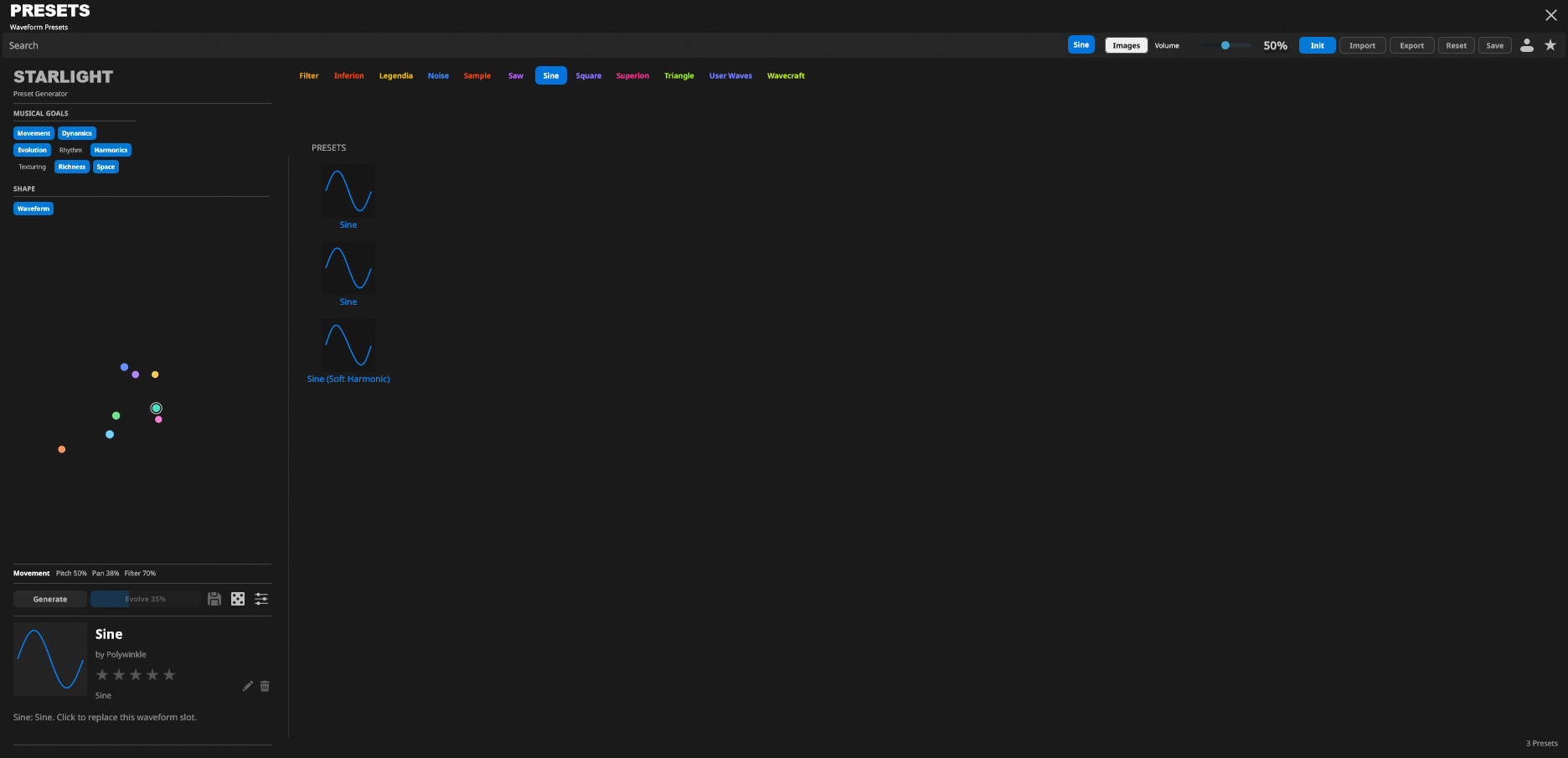
Starlight Module Preset Generator
Starlight generates presets for individual modules. Use it to explore module presets alongside the complete Atlas Supersynth™ presets created with Primordeal Oooze. Neither generator uses AI.
Atlas Supersynth™ brings together 21 effects, 7 wave generators, 8 modulation generators, and 3 MIDI generators, plus a chord system. Standalone versions of the effects and generators are planned to follow a few weeks later. Includes 1,500 presets created by Polywinkle across the ecosystem.
Make Atlas Supersynth™ your own
Choose a look that suits your setup, from the colour of Bliss to the simplicity of Greyscale, with dark and light options for both.
Four themes: Bliss Dark, Bliss Light, Greyscale Dark, and Greyscale Light.
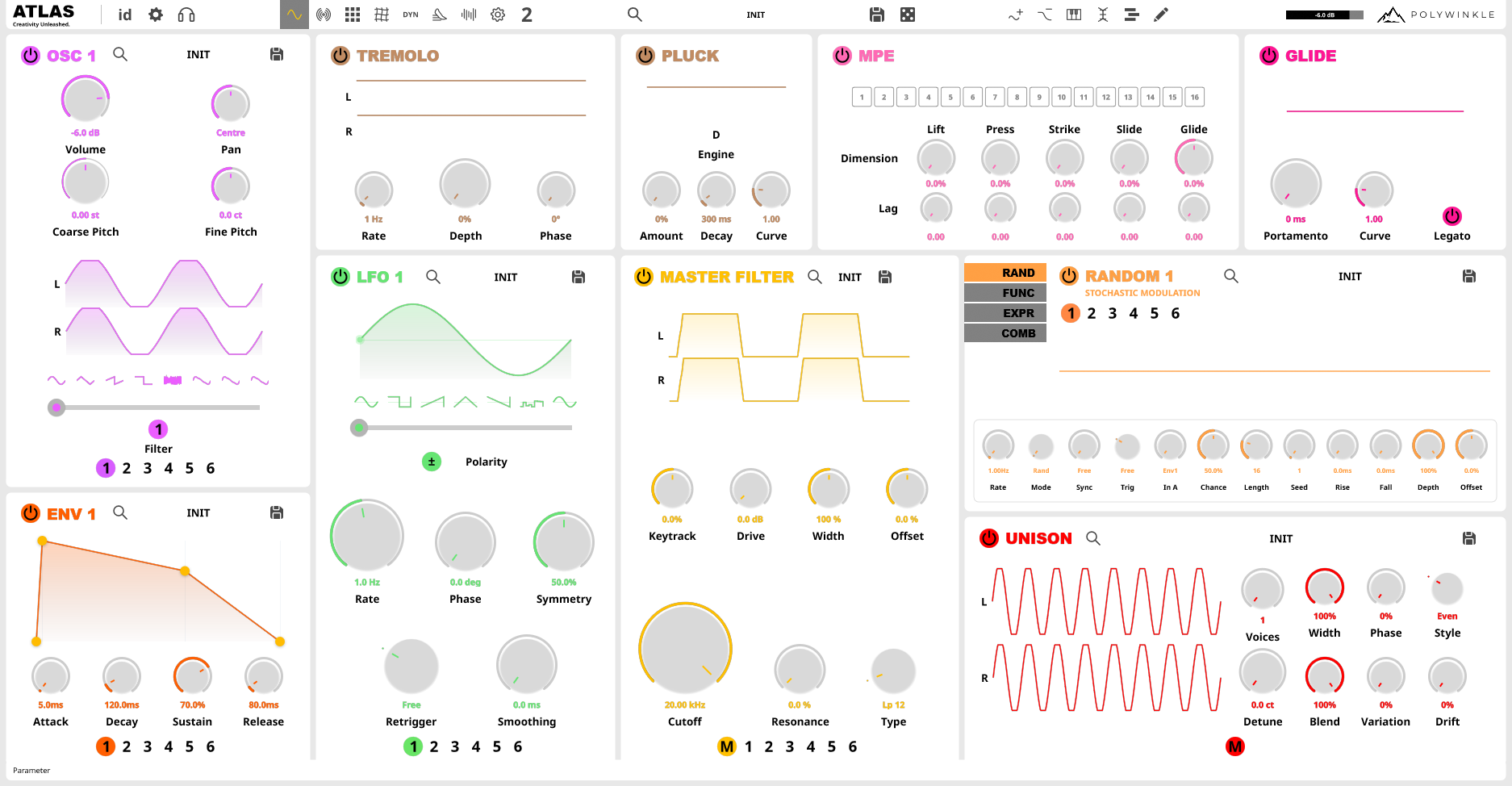
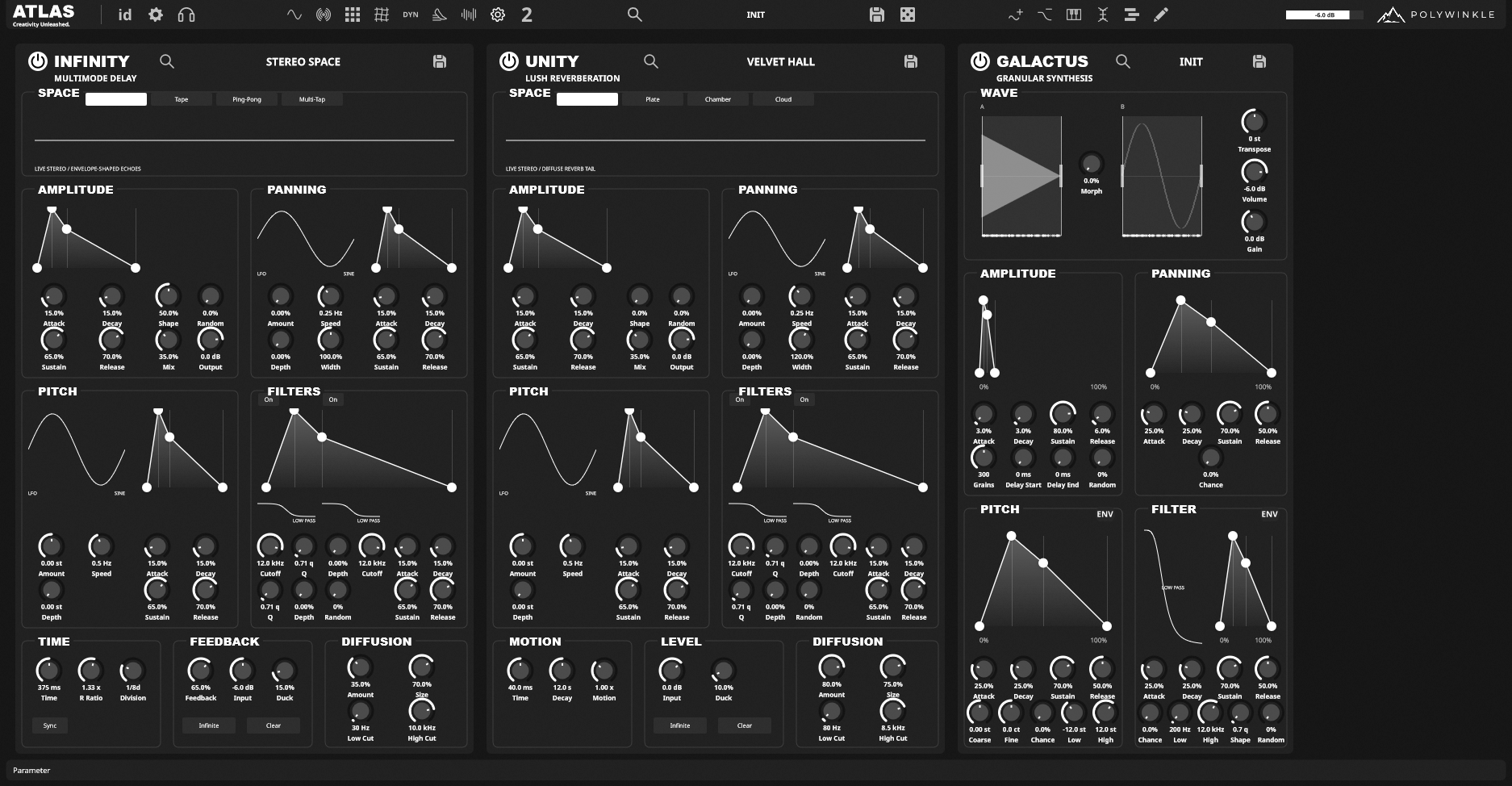
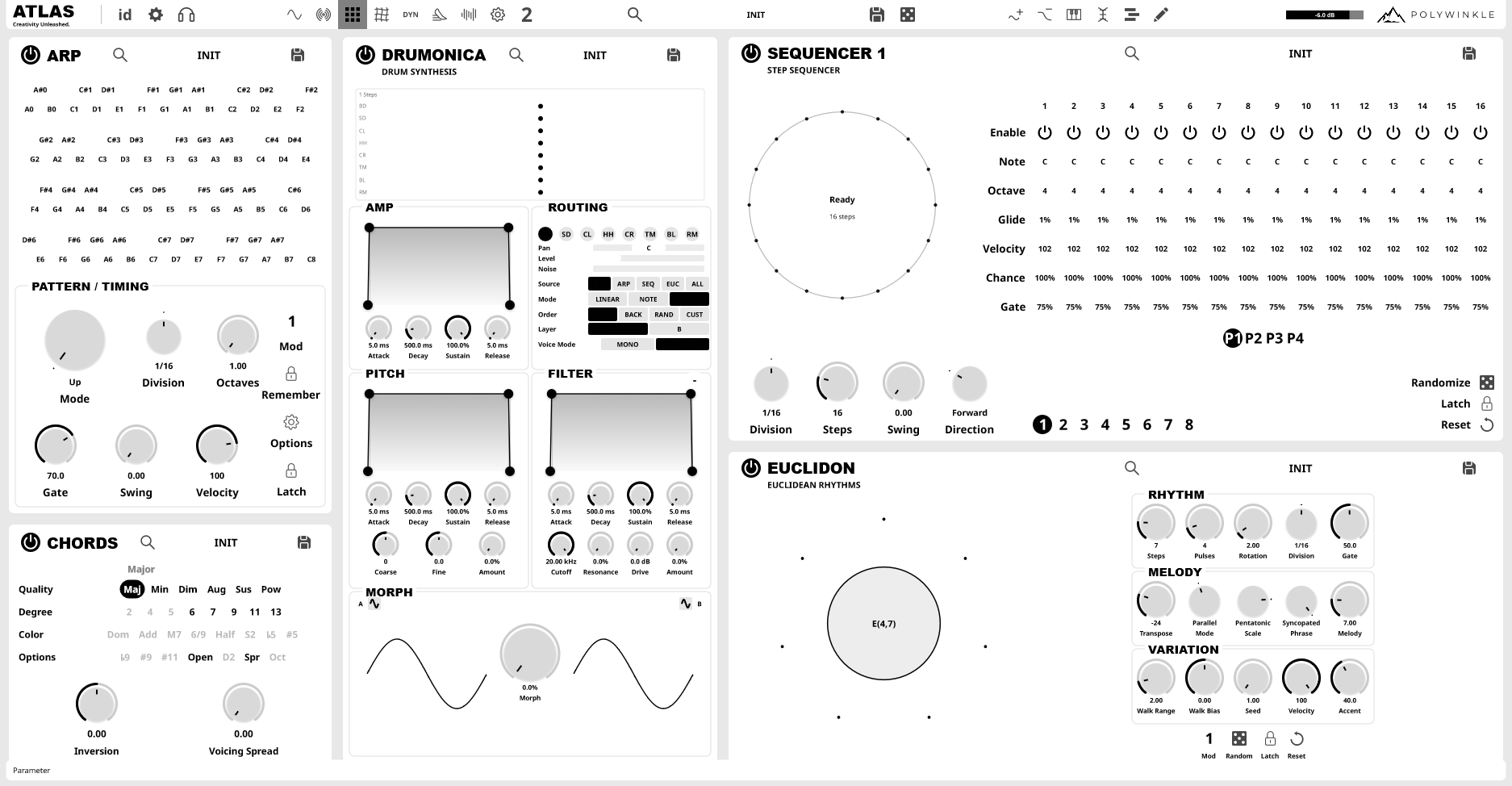
Build a collection of your own waveform shapes alongside your effect presets. Return to a shape, try it in another part of Atlas Supersynth™, or explore it through wave morphing.
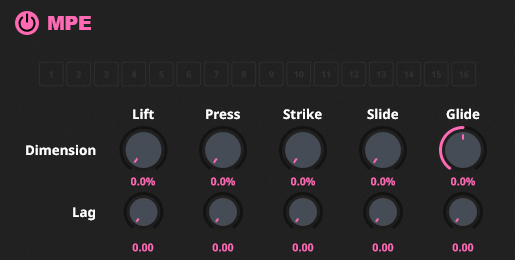
Play expressively with MPE support, and use expression generators alongside LFOs, functions, and rhythmic tools to bring motion and character into your sound.
Explore the complete toolkit. Detailed features and previews follow the purchase section below.
Your next chapter in sound design.
Get Atlas Supersynth™ for a special promotional price of $199.99 USD during the first 30 days of launch.
 Digital download
Each tool has its own place in your sound. Explore each plugin below or visit its own page. Audio and video demos are coming soon.
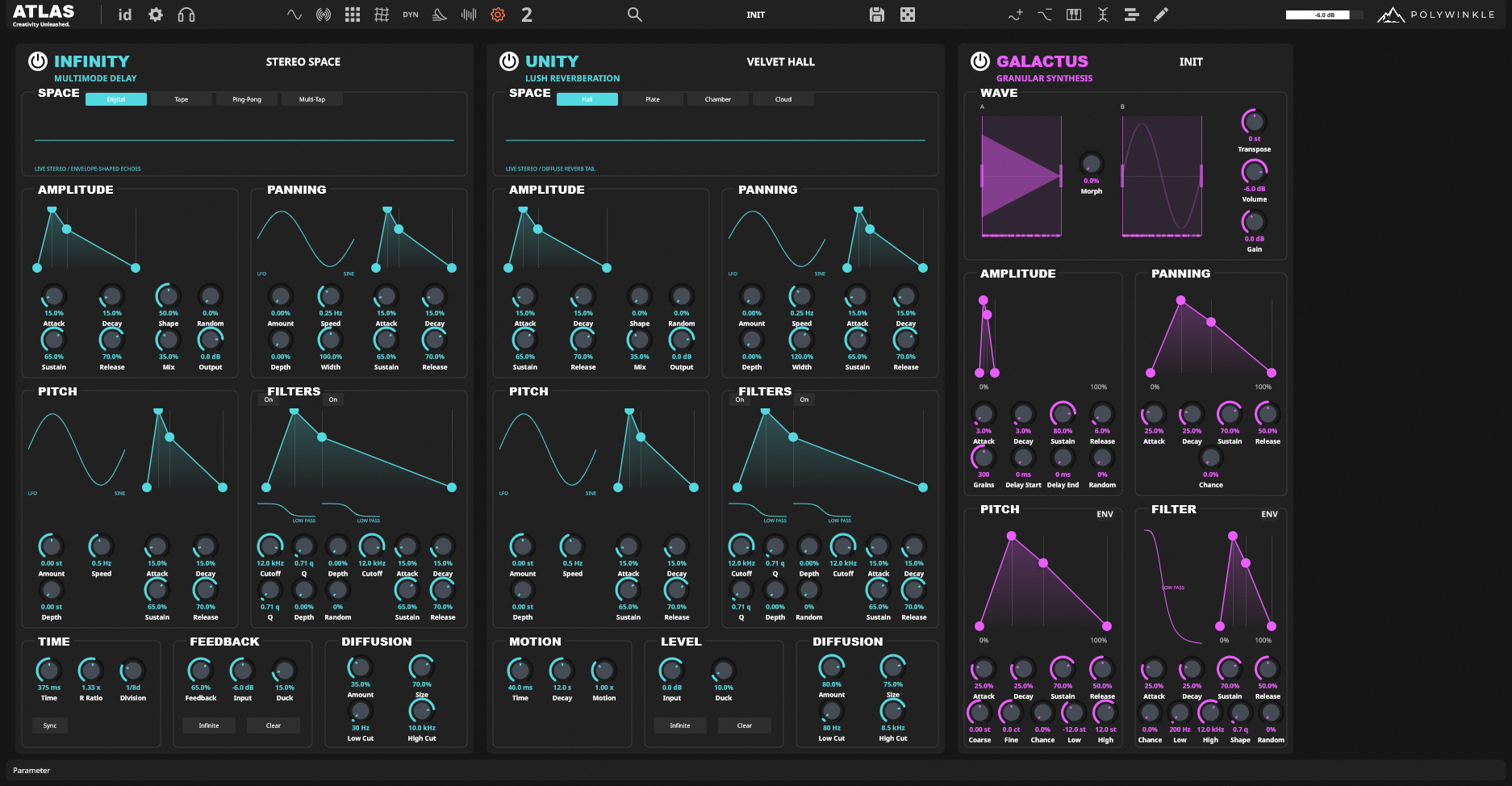
A diffusion-based spatial processor that moves between distinct Echo, Hall, Bloom, Nebula, Eternity, Chamber, Plate, and Cascade modes. Delay time, feedback, density, stereo width, and modulation rate/depth shape the transition from discrete repeats to a dense, evolving tail.
Input and tail diffusion, room size, scatter, diffusion stages, tail count, and tail-length scaling provide detailed control over how reflections build and disperse. Tempo divisions, freeze, and two resonant filter sections let you tune the timing and spectral character of the space.
A multimode delay for echoes, repeating textures, and stereo space.
Explore Tape, Ping-Pong, Multi-Tap, and Grain modes, with amplitude, panning, pitch, and filter controls.
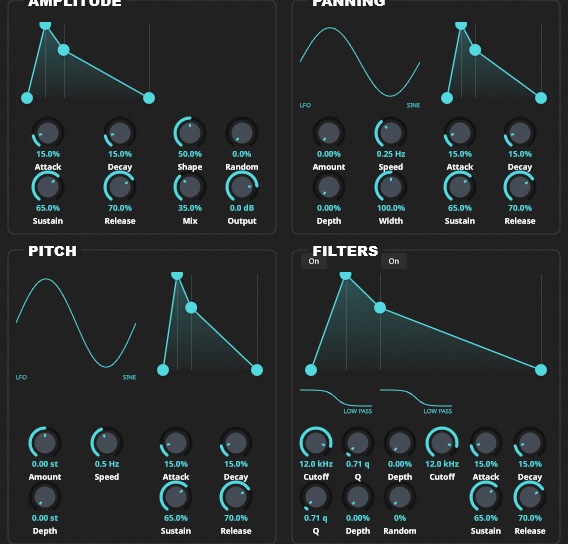
A stereo delay engine with Stereo, Ping Pong, Reverse, Tape, Diffuse, Reverse Forward, Pure Reverse, Chaos, and Reverse Chaos modes. Time, stereo offset, pre-delay, feedback, diffusion, and room size control the relationship between individual echoes and the surrounding space.
Tempo sync supports straight, triplet, and dotted timing. Tape character, flutter, pitch modulation, drive, bit depth, and sample-rate reduction shape the repeats, while low/high cuts can sit at the input, output, or in the feedback path. Ducking, freeze, decay, and dry/wet levels give further control over the tail.
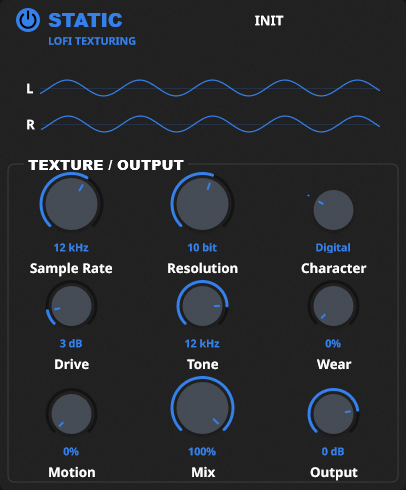
A texture processor combining reduced sample rate and bit depth with input drive and tone filtering. Its Digital, Tape, and Radio characters change the clipping, saturation, and bandwidth behavior rather than simply adding a noise layer.
Wear and motion introduce changing coloration and rate variation. Mix and output controls let you blend the degraded signal with the original and compensate its level, from subtle roughness to pronounced digital and narrow-band textures.
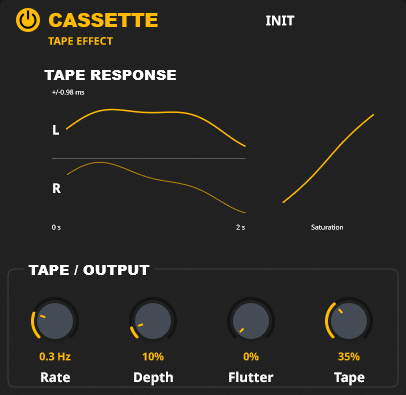
A tape-style pitch and saturation processor built around modulated stereo delay lines. Rate and depth govern slower pitch drift, while flutter introduces faster instability and the Tape control adds saturation and wow to the signal.
The separate slow and fast movement controls let you build an uneven, mechanical feel without relying on random pitch changes alone. The processing uses a fixed compensated delay to accommodate pitch movement in both directions.
A reverb for shaping spacious, sustained ambience.
Shape the reverb with amplitude and panning envelopes, then refine its pitch, filters, diffusion, and motion.
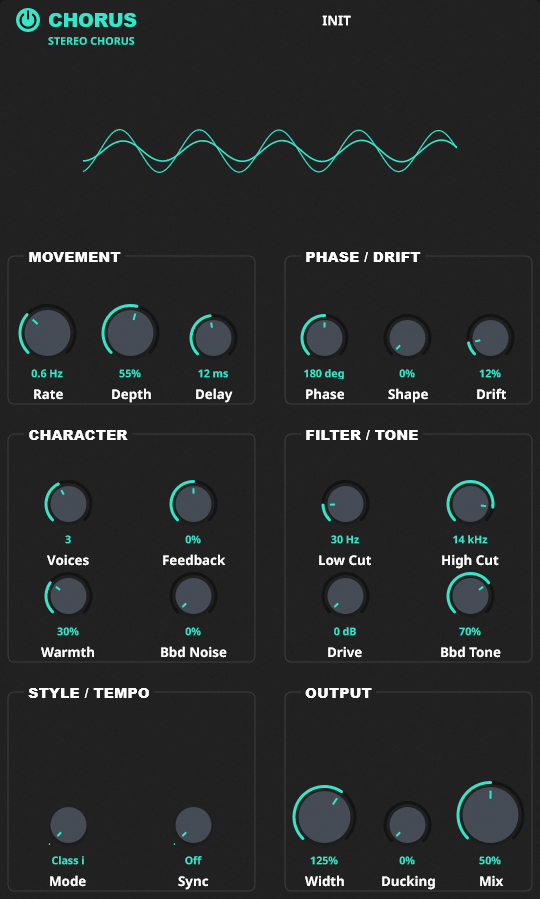
A multi-voice chorus with Classic I, Classic II, Dual, Ensemble, Dimension, and Vibrato modes. Short modulated delays create detuning and width, with control over rate, depth, delay time, voice count, feedback, and the phase relationship between the stereo channels.
Warmth, BBD noise and tone, drive, drift, and LFO shape adjust the character of the modulation. Low/high cuts and ducking help position the chorus around the dry sound instead of letting the widened signal dominate it.
The reviewed vector version provides six stereo compressor lanes with Classic, New York, Glue, and Multiband modes. Threshold, ratio, knee, reduction range, attack, hold, release, detector filtering, RMS behavior, and stereo linking determine how each lane responds to the signal.
The multiband mode splits a lane into three frequency regions with separate compression settings. Parallel mix, makeup gain, envelope shaping, and independent or grouped lane routing support anything from controlled peak reduction to layered parallel compression.
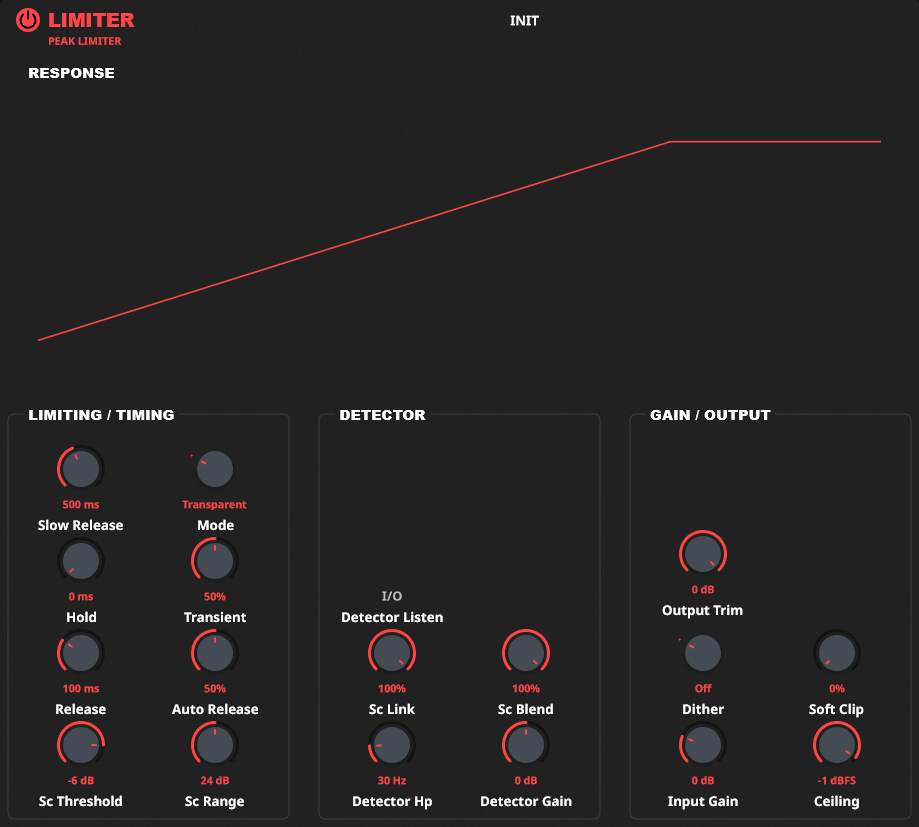
A lookahead dynamics processor with Transparent, Punch, and Smooth modes. Input gain, output ceiling, release, hold, automatic release, and transient controls shape how peaks are reduced and how quickly the gain recovers.
Detector high-pass filtering, sidechain gain/link controls, soft clipping, a slower release stage, and output trim provide additional control over the limiting behavior. These controls let you adjust recovery, detector sensitivity, and final signal level independently.
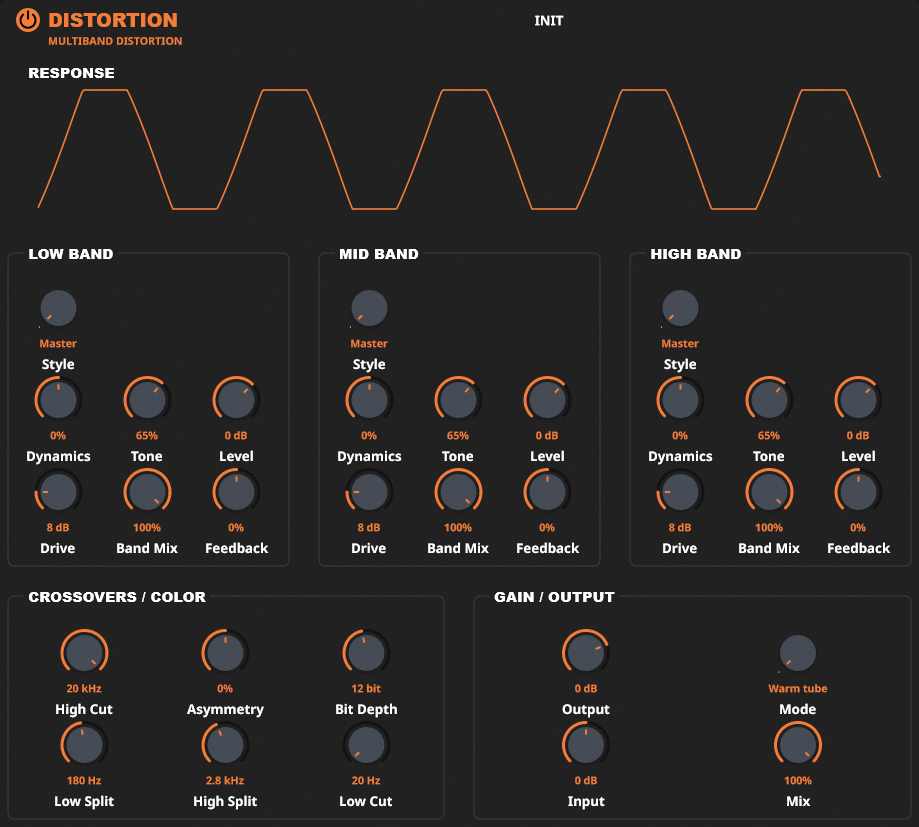
A three-band distortion stage with Warm Tube, Tape, Soft Clip, Hard Clip, Wavefold, Diode, Bit Crush, and Fuzz modes. Adjustable low and high crossover points let you process bass, midrange, and treble with different amounts of coloration.
Each band has drive, mix, feedback, dynamics, tone, and level controls. Global low/high cuts, asymmetry, bit depth, and wet/dry mixing help balance harmonic density against the original signal.
A seven-band equalizer with bell, shelf, high-pass, low-pass, notch, band-pass, and bypass choices. Frequency, gain, Q, and slope/stage controls shape each band, with response and live-analysis displays for checking the combined result.
The reviewed implementation includes minimum-phase and linear-phase processing, separate channel-bank editing, and a custom curve-design path. Linear-phase operation introduces processing latency, so the choice changes timing behavior as well as the phase response.
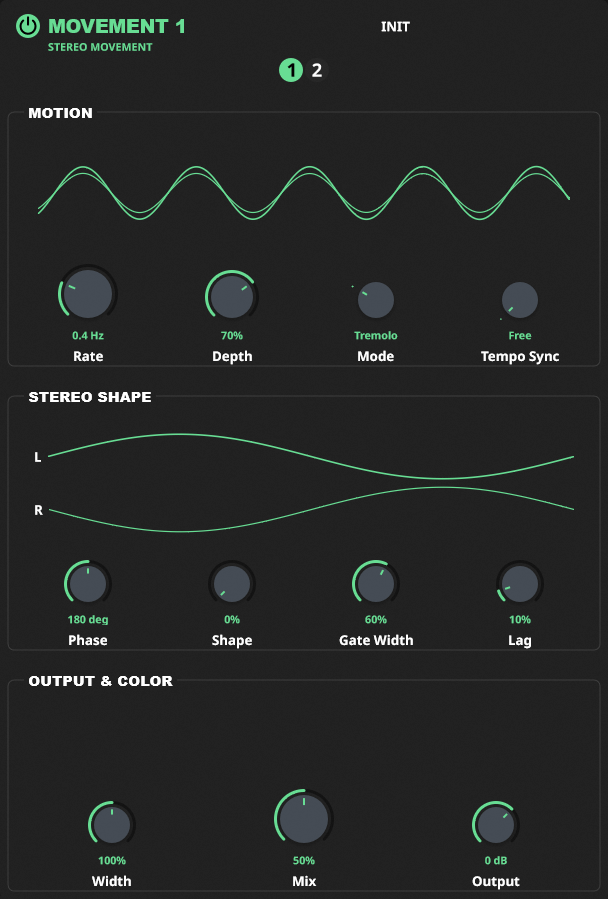
A stereo movement processor with Tremolo, Auto Pan, and Rhythmic Gate modes. Rate, depth, stereo phase, and waveform shape control whether the effect pulses in place, travels across the stereo field, or produces sharply timed level changes.
Free rate or tempo divisions set the clock. Smoothing softens transitions, while gate spread, stereo width, wet/dry mix, and output level help integrate the movement into the patch.
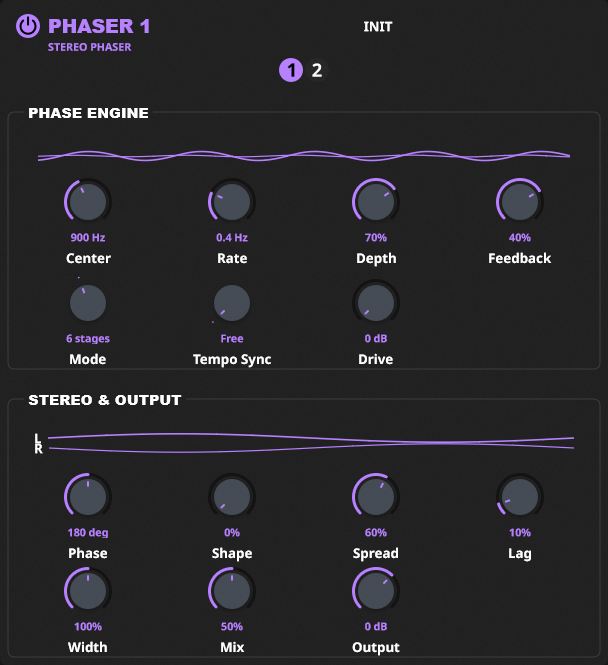
A swept all-pass filter network with selectable 4-, 6-, 8-, and 12-stage configurations. Mixing its phase-shifted output with the dry signal produces moving notches; center frequency, depth, rate, and feedback determine their position and intensity.
Stereo phase, stage spread, waveform shape, smoothing, and drive adjust the sweep character. Tempo sync, width, and wet/dry controls support both slow stereo motion and more pronounced rhythmic phasing.
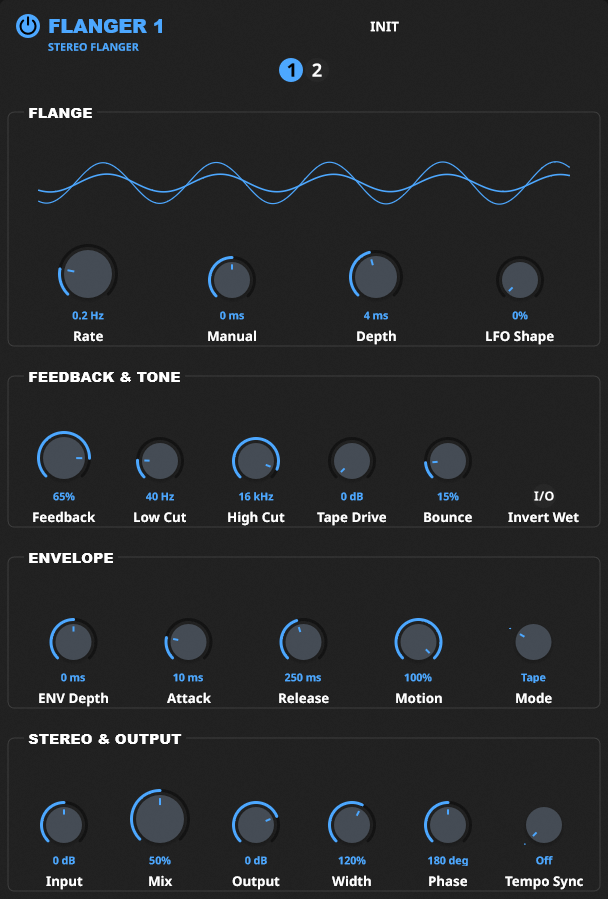
A short-delay modulation effect with Tape, Jet, Through Zero, and Barber Pole modes. Manual offset, delay depth, feedback, and wet-signal inversion shape the comb-filter pattern, from light metallic movement to strongly resonant sweeps.
Stereo phase, width, low/high cuts, tape drive, and bounce tune its placement and color. Envelope depth with attack/release controls adds signal-responsive movement alongside the regular modulation clock.
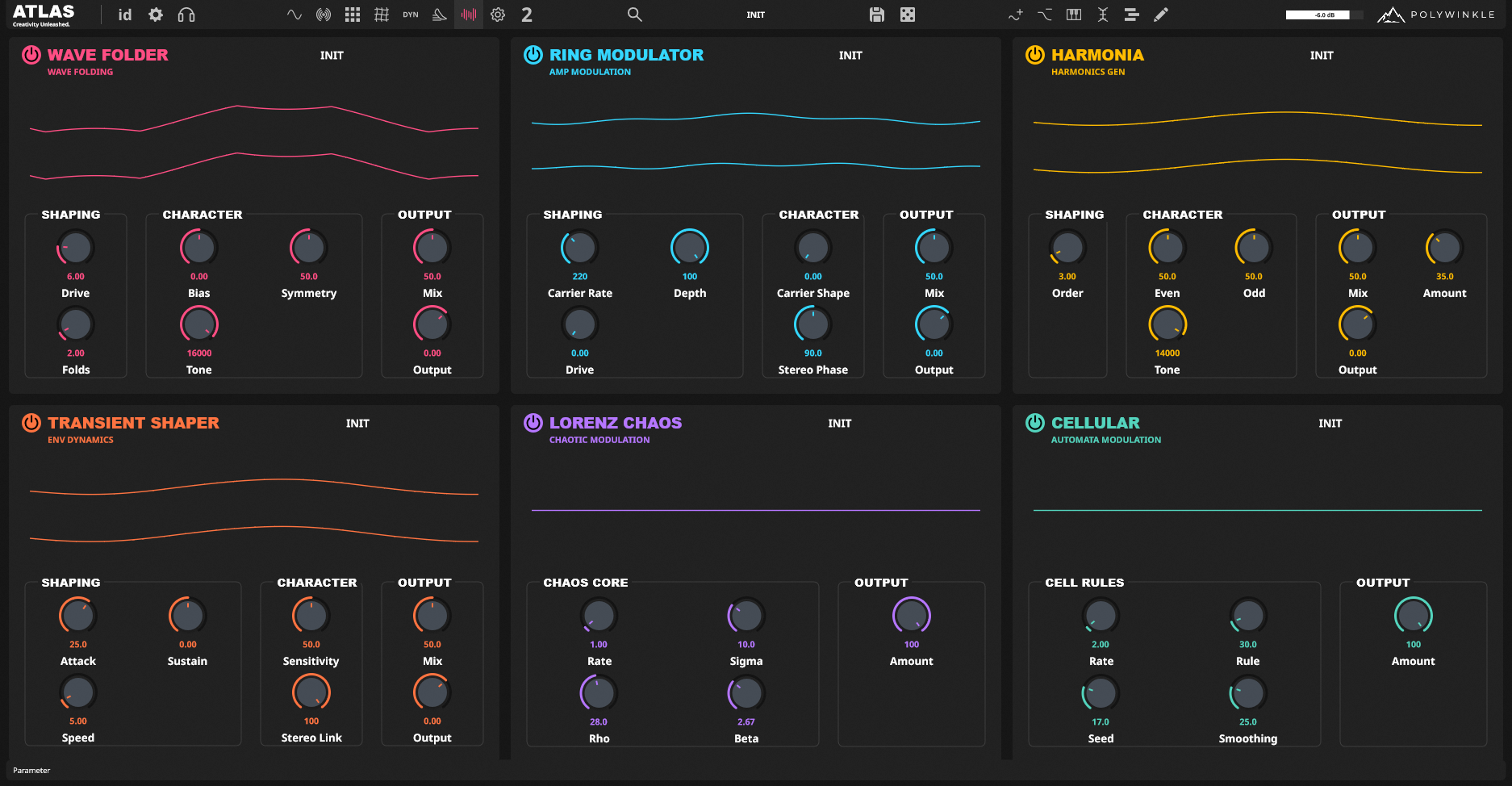
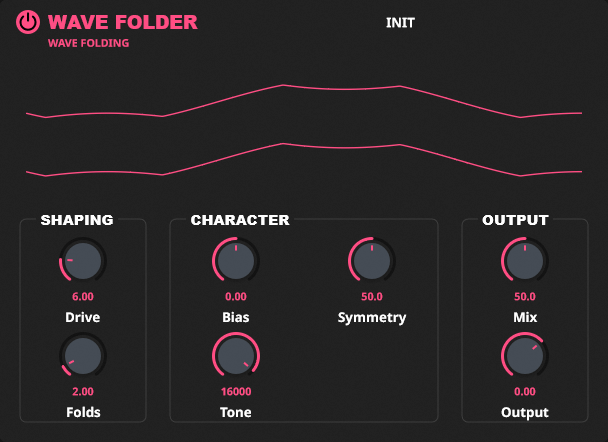
A nonlinear shaper that folds the waveform back on itself instead of simply clipping its peaks. Drive and fold count increase the number of folds, while bias and symmetry change how positive and negative portions of the wave enter the transfer curve.
Tone filtering controls the resulting brightness, and mix/output controls balance the folded signal against the source. The reviewed engine processes this nonlinear stage with 4x oversampling and aligns the dry path for blending.
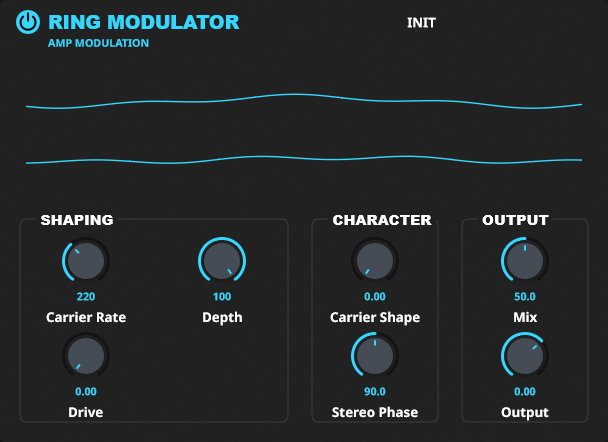
Multiplies the input by an internal carrier to generate amplitude-modulation sidebands. Carrier rate spans slow rhythmic motion through the audio range, while shape moves between sine, triangle, and square-like carrier forms.
Depth controls the strength of multiplication, stereo phase separates the carrier motion between channels, and drive adds saturation ahead of the modulation. Mix and output controls let you blend metallic or inharmonic content into the original sound.
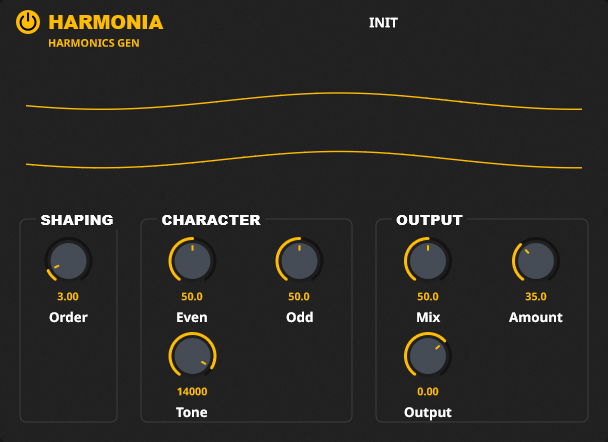
An input-driven harmonic shaper using Chebyshev polynomial terms. Highest order, overall amount, and separate odd/even controls change the harmonic weighting, allowing a different balance of edge, body, and brightness.
Tone filtering, dry/wet mix, and output gain provide control over the resulting spectrum. Its nonlinear processing is oversampled; the resulting harmonics depend on the level and character of the incoming waveform.
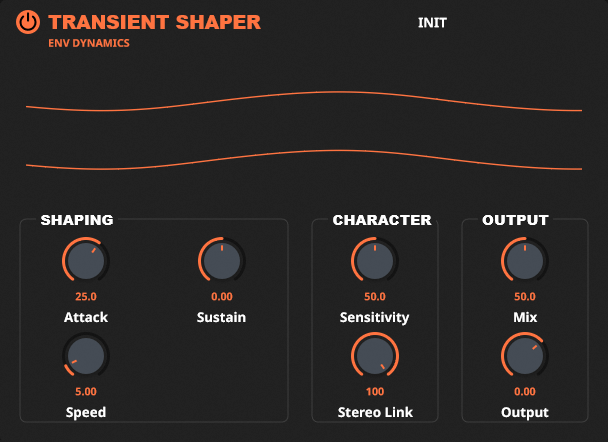
Separates fast and slow envelope behavior to distinguish attacks from sustained energy. Independent attack and sustain controls change the gain applied to those portions, letting you emphasize the leading edge or bring out the body of a sound.
Speed and sensitivity adjust how the detector responds, and stereo linking controls how closely the channels share detection. Mix and output level provide parallel blending and gain compensation.
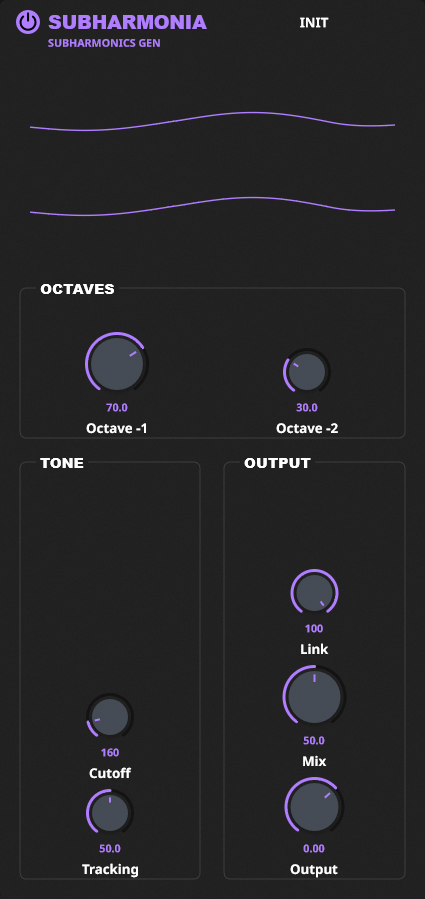
An input-tracking subharmonic generator that derives components one and two octaves below detected cycles. Independent octave amounts set their balance, while tracking controls and a low-pass stage shape the response and resulting low-frequency content.
Stereo linking influences whether the channels track more independently or from a shared signal. Mix and output controls blend the generated bass with the source; tracking results depend on how clearly the input establishes its fundamental.
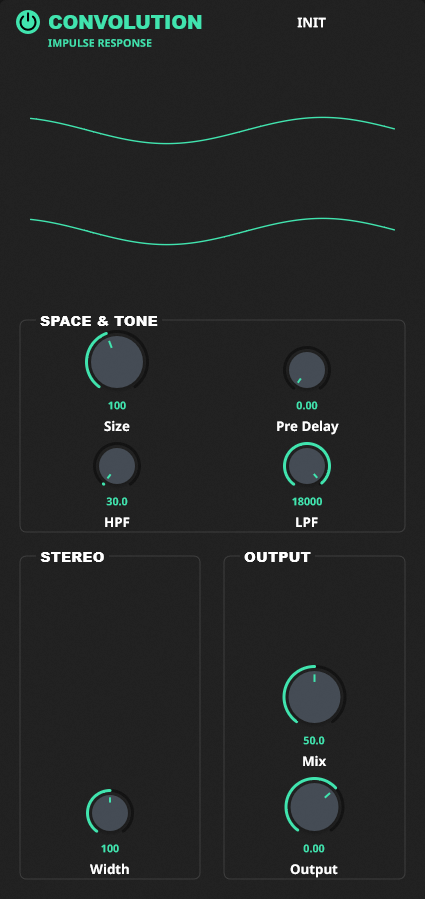
Processes the signal through an impulse response to apply the time and frequency character of a captured space or designed response. The reviewed implementation accepts custom impulse files up to ten seconds long and stores the response with the relevant state.
Size stretches the impulse in time, pre-delay offsets its onset, and low/high cuts control its bandwidth. Stereo width, wet/dry mix, and output gain let you fit the response into the patch.
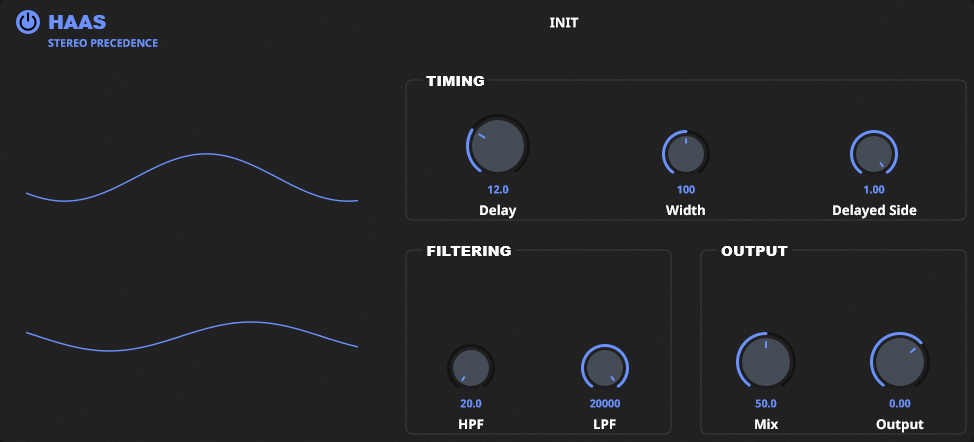
A stereo precedence effect that delays a selected channel by a short amount to change perceived position and width. The delay operates on one side of the signal rather than creating a repeating echo.
Low/high cuts, width, mix, and output controls shape the widened result. As with other inter-channel delay techniques, the summed mono sound can change because the channels no longer align in time.
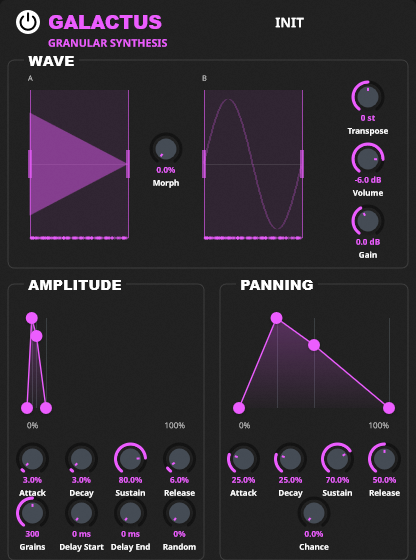
A granular synthesizer for building textures from small fragments of sound.
Shape grain size, position, density, pitch, filters, and envelopes to explore the source material.
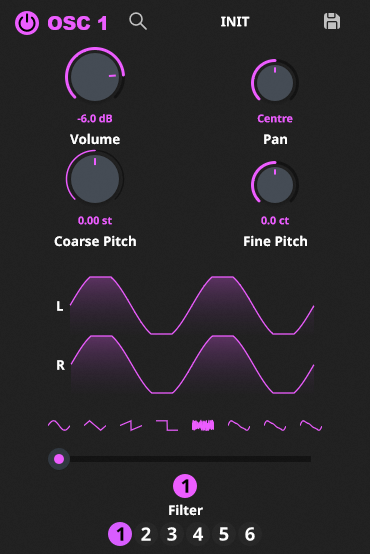
Super Oscillator brings together waveform morphing and its own preset system. Its oscillator bank combines sine, triangle, saw, square, noise, and three sample positions. Reorder the wave positions to change the morphing path, with interpolation blending adjacent sources as the morph position moves.
Selected wave assets and shared providers extend the source material beyond the built-in shapes. Pitch, level, pan, envelope, unison, and modulation routing then shape how the oscillator contributes to the final patch.
Morph four waves at once. Quadrix is a selectable oscillator that blends any or all of its four waveforms into a unique shape, giving you a direct way to explore the space between them.
Every waveform is swappable. Bring in different waveforms, including waves from Wavecraft, Superion, and Inferion, then combine and morph them to build your own evolving sound.
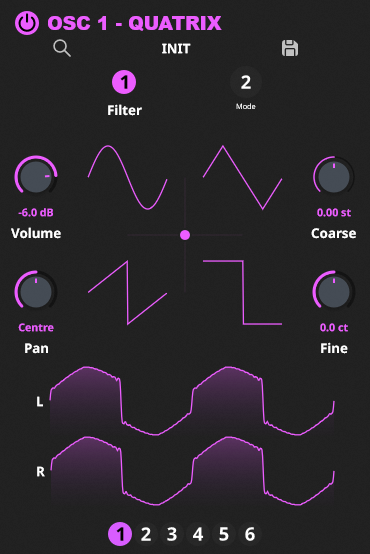
Super Oscillator and Quadrix offer different paths through your waveforms. Super Oscillator lets you arrange wave positions and morph along a sequence, blending neighbouring sources. Quadrix brings four waves together, combining any or all of them simultaneously.
Choose the approach that fits your sound: travel through a progression of shapes, or explore a four-wave blend. Swappable waveforms connect both approaches to the wider Atlas Supersynth™ wave-shaping system, with sources from Wavecraft, Superion, and Inferion.
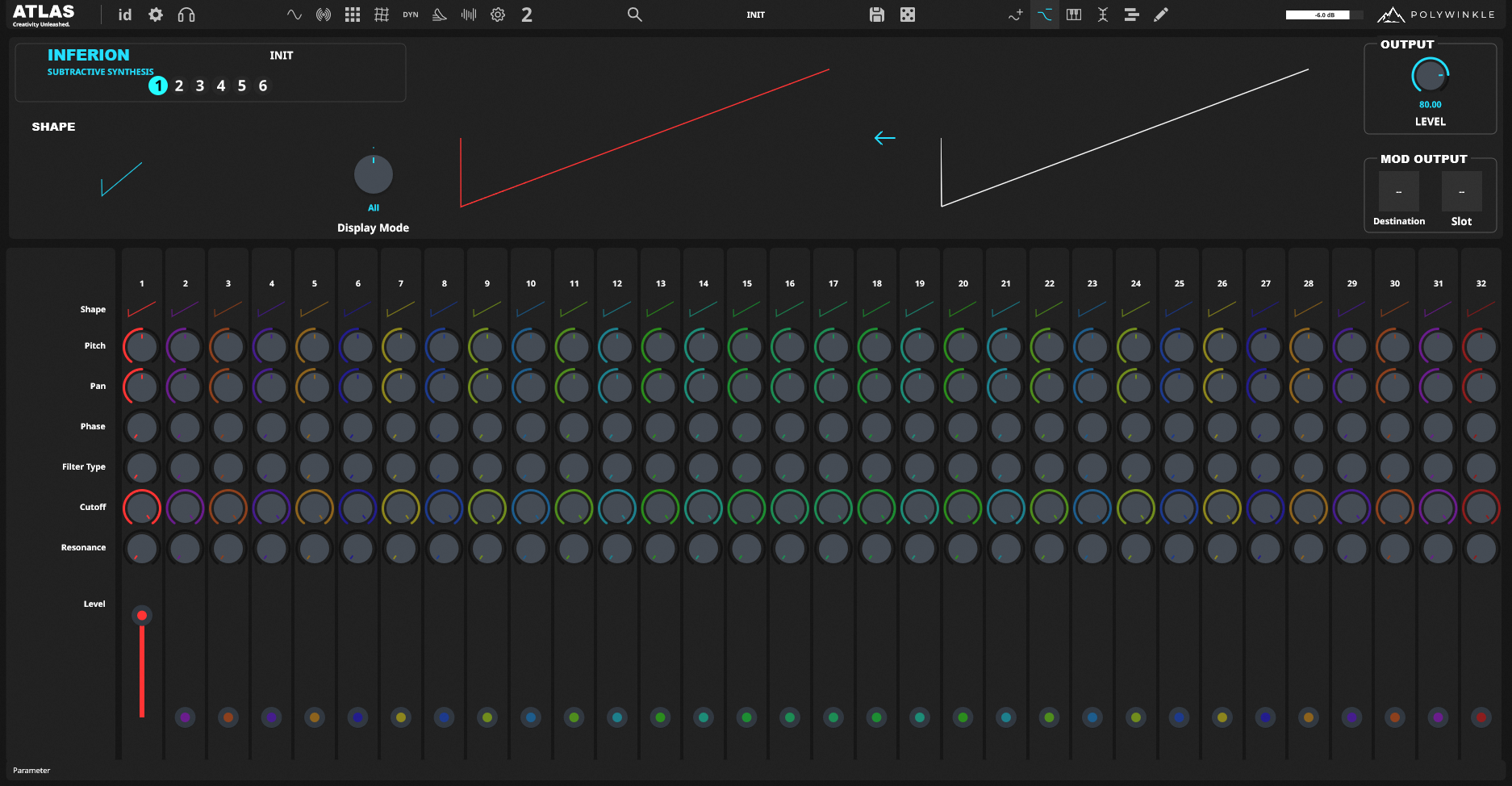
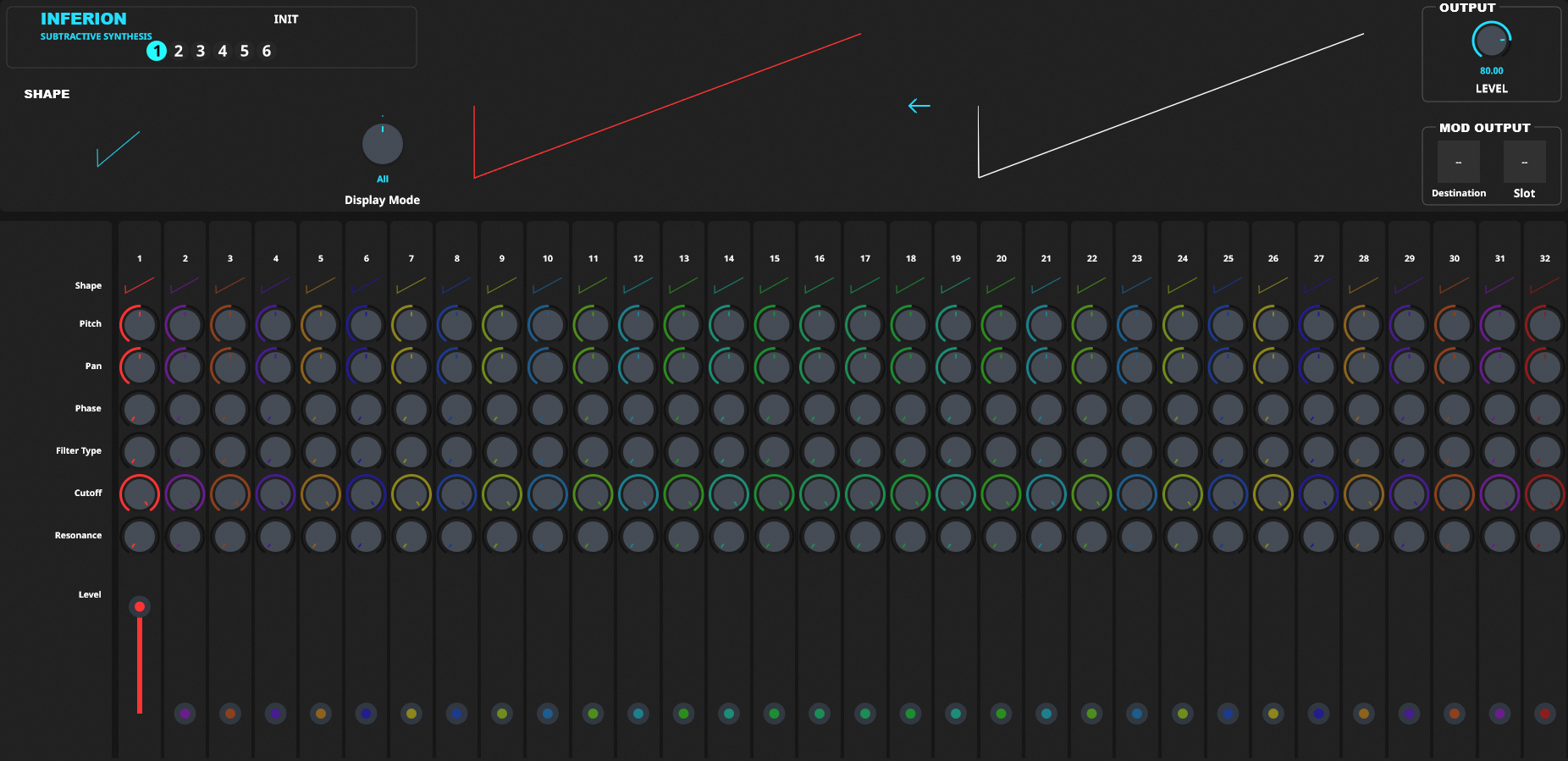
An additive engine with 32 editable channels. Channels start at successive harmonic ratios, then expose individual pitch, pan, phase, waveform shape, filter type, cutoff, resonance, and level controls for building a spectrum component by component.
Per-channel custom waves and a master pitch/level stage extend the harmonic design. Six stored Superion instances can supply wave sources elsewhere in Atlas Supersynth™, with waveform previews and repeating-wave export available from the editor.
A subtractive wave-building engine with 32 editable channels based around a shared fundamental rather than Superion's default harmonic stack. Per-channel tuning, phase, shape, level, pan, and filtering let you combine differently filtered and detuned components.
Choose a base shape or custom wave, then edit channel-specific shapes and filter settings. Six stored instances, overall pitch/level controls, and the shared provider system let the resulting waveform become reusable source material.
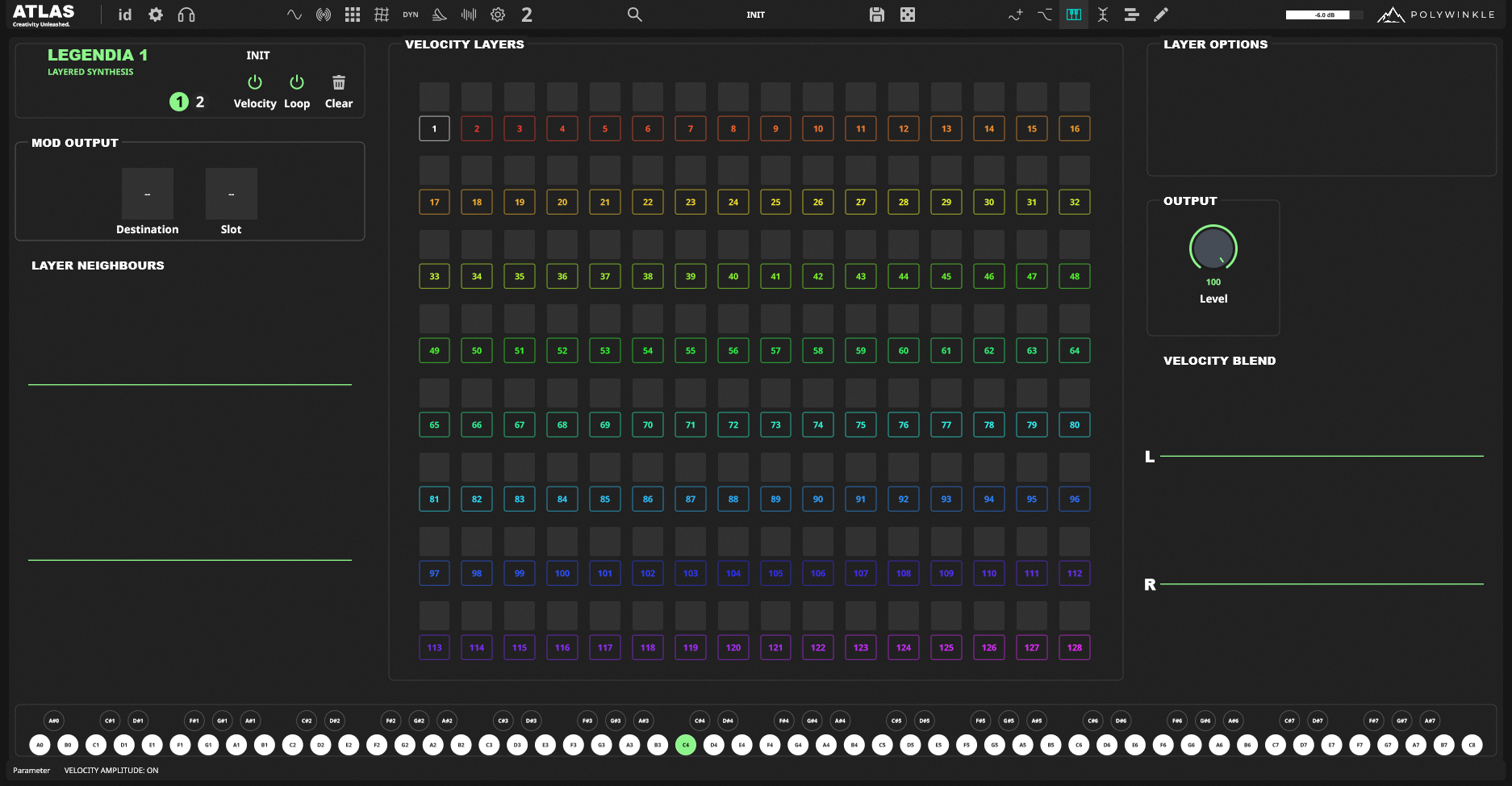
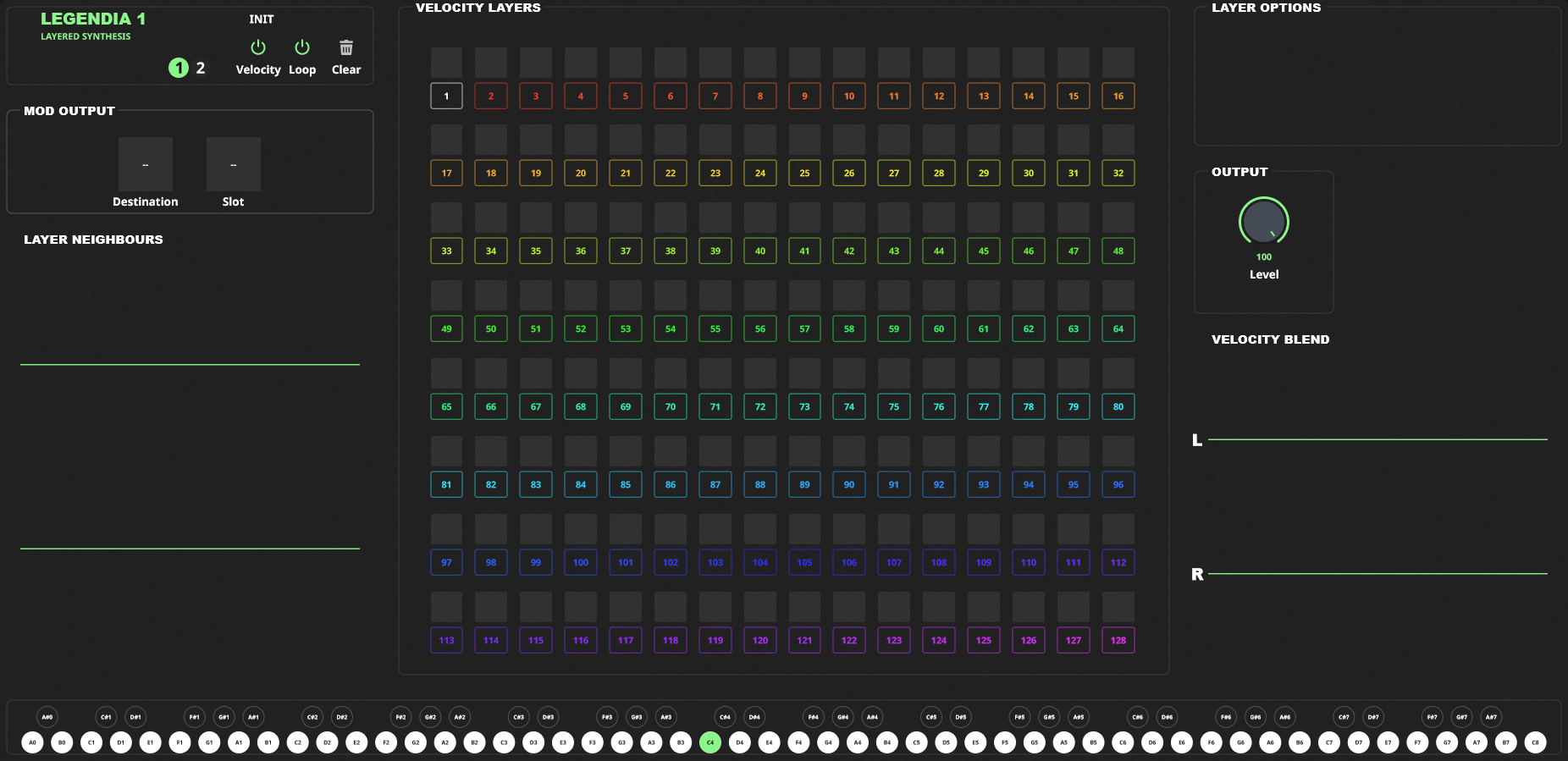
A keyboard- and velocity-layered wave provider. Each of 128 MIDI keys can hold up to 128 velocity positions, with interpolation between available neighboring layers so changes in playing strength can move smoothly between source waves.
Layers can contain repeating wave cycles or audio clips. Looping and velocity-amplitude options control playback behavior, while presets retain the key mappings and layer data for reuse in other patches.
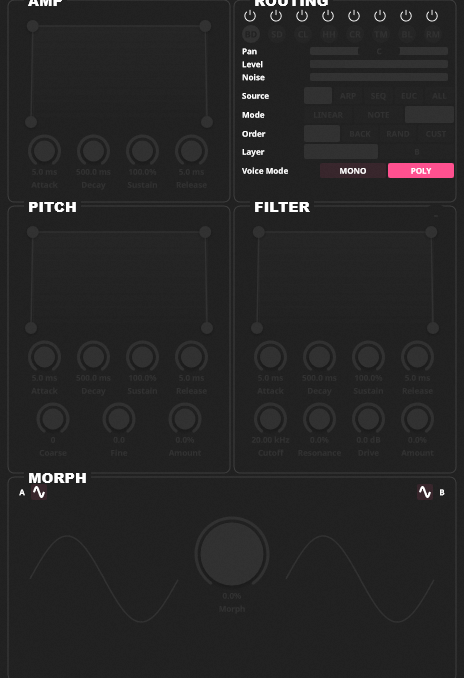
A procedural drum source with Kick, Snare, Clap, Hat, Tom, Bell, Rim, and Noise models. It combines oscillatory components, noise, pitch sweeps, and decaying envelopes rather than relying solely on fixed drum recordings.
Tune, decay, pitch sweep, noise, click, shape, drive, and level control the balance of body and transient. Its generated drum material can be assigned through Atlas Supersynth™'s wave-provider workflow.
An editable waveform provider with freehand drawing and point-based editing. Load an existing wave as a starting point or create a new shape, then adjust smoothing while monitoring the waveform preview.
Six independent drawing slots and dedicated drawing presets make shapes reusable. Through the shared wave system, these assets can supply oscillator material or control shapes in compatible LFO and filter destinations.
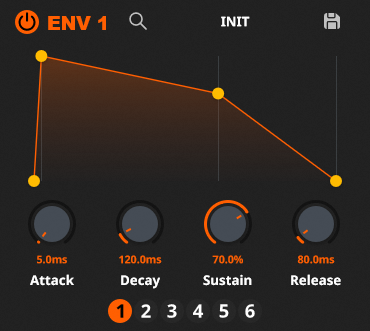
A graphical multi-point envelope built around attack, decay, sustain, and release behavior. Additional points and segment curvature let you design more detailed contours than a fixed four-knob envelope.
Six independent envelopes support routed control of envelope timing and levels as well as ordinary modulation destinations. The editor and processing model retain stable anchor points while allowing up to 50 points in a contour.
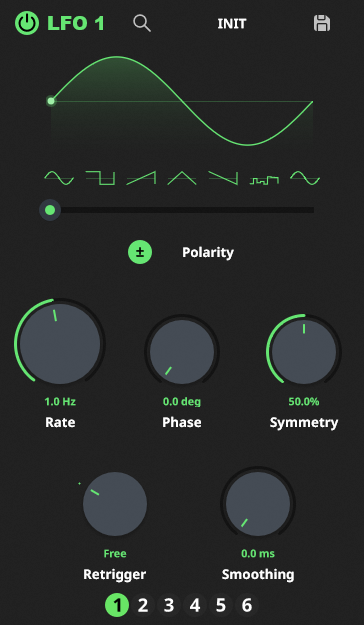
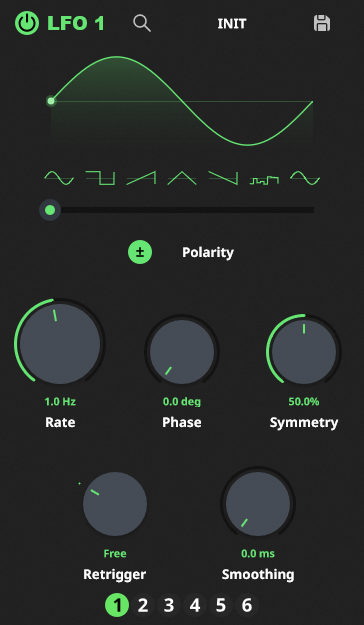
Six low-frequency modulation generators with morphable, reorderable waveform positions. Built-in periodic and stepped-random shapes can be combined with sampled or custom shapes, including shapes that extend beyond a single cycle.
Rate, phase, symmetry, smoothing, and bipolar/unipolar output change both timing and contour. Free, retriggered, and per-note clock behavior, together with routing into other modulation parameters, supports coordinated or independently moving parts of a patch.
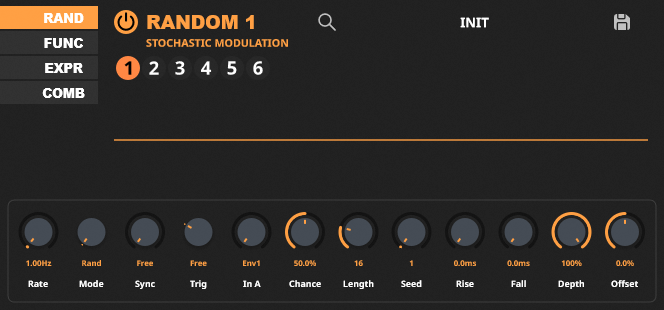
A clocked modulation source with Random, Turing, Sample & Hold, Binary, and Note modes. It can generate new values, maintain an evolving loop, sample another routed source, produce gates, or choose a new value on note-on.
Seed, loop length, and probability make sequences repeatable or gradually mutable. Tempo sync, retrigger selection, separate rise/fall smoothing, signed amount, and offset control how abrupt or fluid the output becomes.
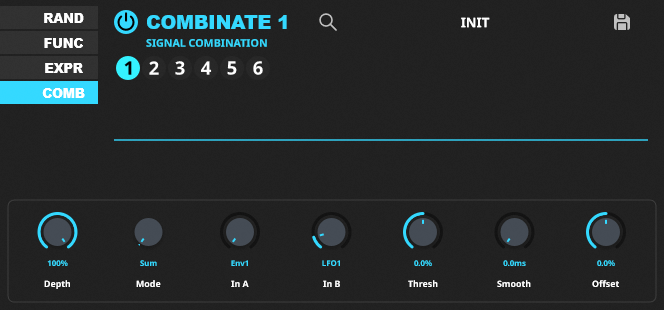
Combines two routed modulation inputs through operations such as addition, subtraction, multiplication, division, and crossfading. Threshold, offset, lag, and an editable transfer curve provide ways to constrain or reshape the result.
The remapping curve turns the first input into a controllable response shape rather than merely changing its level. Output amount, offset, and slew let the combined signal become a new modulation source for other destinations.
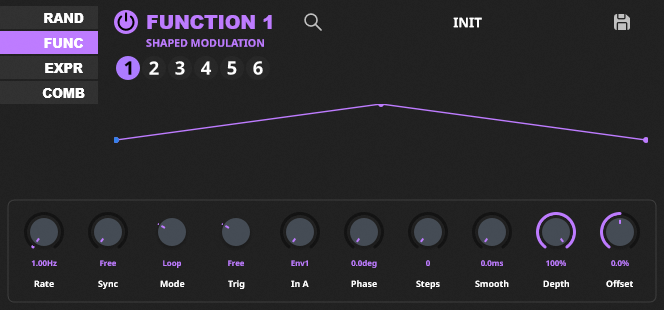
An editable time-based curve generator with Loop, One Shot, and Ping Pong behavior. Curved segments define how its output moves across a cycle, and step quantization can turn a smooth function into discrete held positions.
Free or tempo-synchronized rate, phase, key/routed retriggering, output depth, offset, and smoothing let you use the same curve as a repeating movement or a triggered gesture. Six instances hold their own curve data.
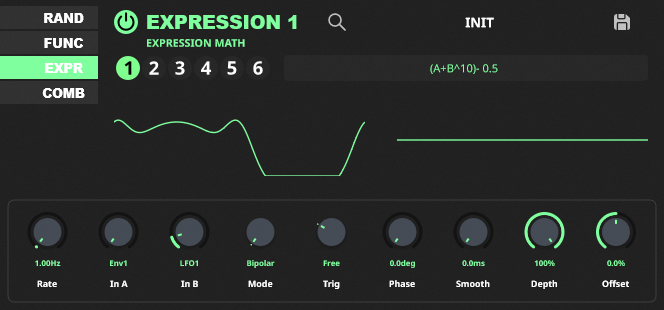
A formula-based modulation generator using two routed inputs, elapsed time, phase, and note velocity. Arithmetic and functions such as sine, cosine, absolute value, minimum, maximum, and clamp let you define relationships that are awkward to draw as a single curve.
Formulas are compiled into a bounded calculation program, with output depth, offset, slew, and bipolar/unipolar handling. This is the mathematical Expression generator; Atlas Supersynth™'s MPE performance dimensions are separate modulation inputs.
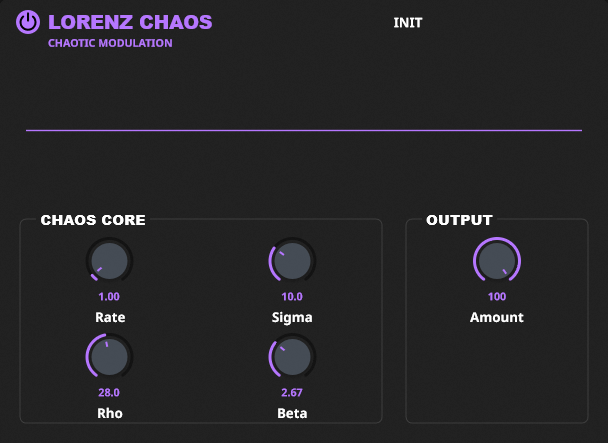
A continuous chaotic modulation source based on the Lorenz differential equations. Sigma, rho, and beta change the coupling and shape of the trajectory, while rate controls how quickly it evolves.
The reviewed generator derives a bounded bipolar output from the evolving trajectory and scales it with an amount control. It is useful for motion with internal continuity that does not simply repeat a conventional LFO cycle.
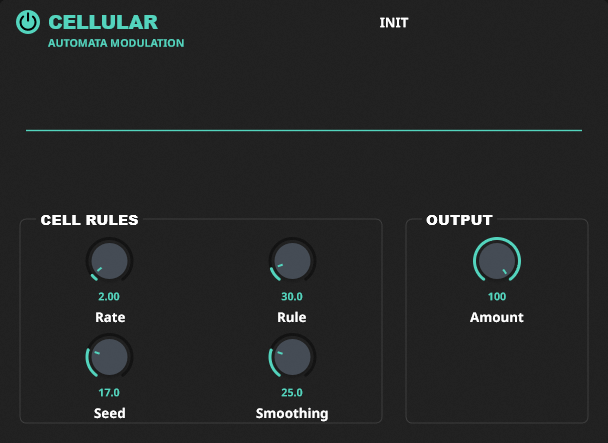
A clocked modulation source built from a 64-cell binary state. Each new generation applies a selected elementary rule from 0 to 255 to neighboring cells, creating structured patterns from simple local decisions.
Seed chooses the initial state, rate sets generations per second, and smoothing turns abrupt state changes into slower transitions. Amount scales the bipolar output for subtle variation or more pronounced generative movement.
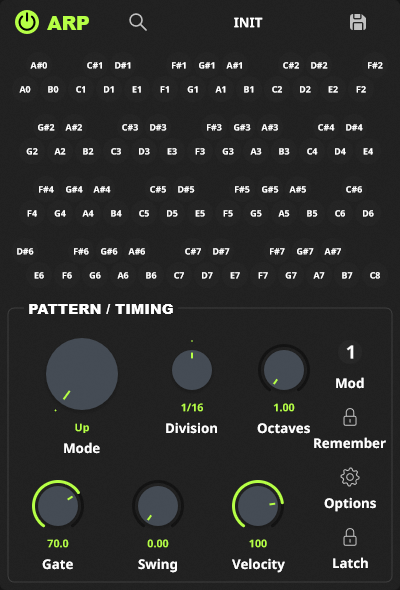
Turns held or latched notes into a tempo-based note pattern. Note ordering, octave range, rhythmic division, gate, swing, and velocity controls shape the phrase without changing the original held-note input.
The arpeggiator works with the chord system, so a played note or voicing can become the material for a moving pattern. The reviewed interface also previews note activity and the generated sequence.
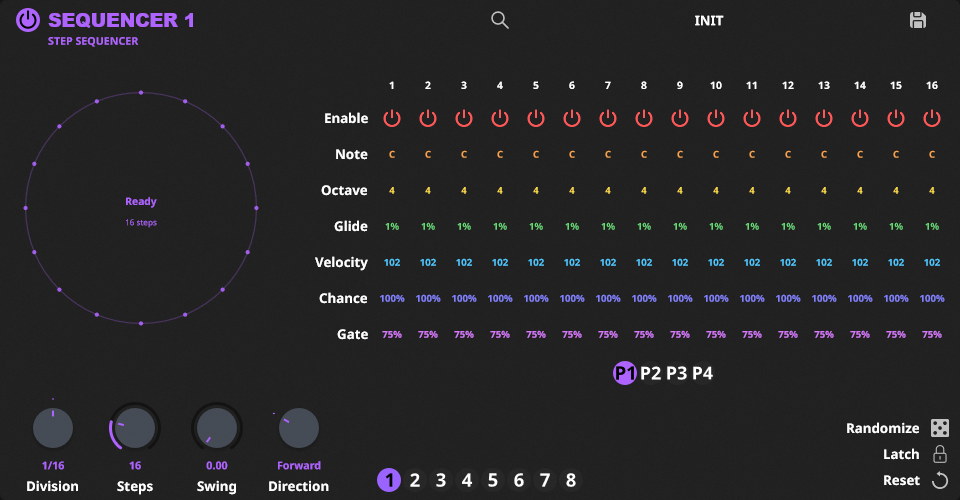
The reviewed vector interface presents a 16-step note matrix with separate enable, note, octave, glide, velocity, chance, and gate rows. Each step can change both pitch content and articulation rather than acting only as a repeated trigger.
Tempo division, playback order, swing, and triggering behavior control how the pattern advances. Per-step chance and glide introduce variation and connected pitch movement while velocity and gate set the strength and length of each note.
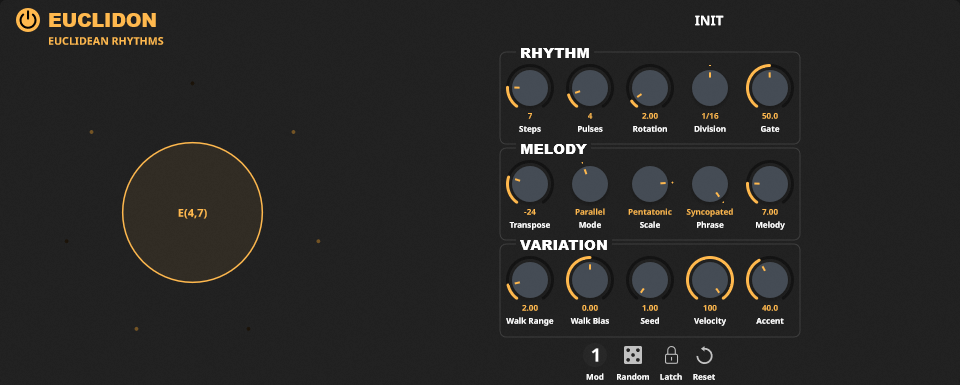
A Euclidean MIDI generator that distributes a chosen number of pulses across up to 32 steps. Rotation shifts the rhythm against the beat, while division, gate, velocity, accent, and transpose shape its timing and articulation.
Melodic modes include fixed-root, rhythm-linked, cyclic, and seeded random-walk behavior. Scale, phrase, melody length, walk range, and bias let the rhythm drive structured pitch movement as well as percussion-like repetition.
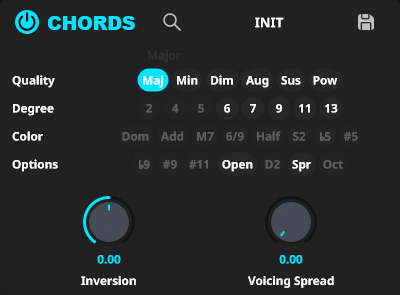
Expands incoming notes into selected chord voicings from a bank of 64 structures. The bank includes major/minor, suspended, diminished, augmented, extended, open, clustered, quartal, and quintal forms.
Inversion and spread change how chord tones are distributed across registers. Combined with the arpeggiator and sequencer, a single root can become a voiced chord or the pitch material for a rhythmic phrase.
| Instrument | Multi-mode synthesizer with morphing and granular synthesis |
| Oscillators | 6 |
| LFOs | 6 |
| Filters | 6 |
| Compressors | 6 stereo compressor lanes |
| Random generators | 6 |
| Expression generators | 6 |
| Function generators | 6 |
| Combinate generators | 6 |
| Effect ecosystem | 21 effects |
| Generator ecosystem | 6 wave generators, 8 modulation generators, 3 MIDI generators, plus a chord system |
| Reusable waveforms | Shared across filters, LFOs, and amplitude shaping |
| Effect presets | Designed for compatibility with corresponding standalone plugins; standalone releases planned a few weeks after Atlas Supersynth™ |
| Included presets | 1,500 presets across the ecosystem |
| Installation size | Details to be announced |
| Manual | |
| Expression | MPE (MIDI Polyphonic Expression) support |
| Advanced routing | Mid/side filter and dynamics control; adjustable effect order |
| Formats | VST3, AAX, AU, and standalone |
| Preset creator | Polywinkle |
| Sign-in | Google account or a one-time code |
| Licensing checks | Internet required for daily licensing checks |
| Local licensing data | No licensing information stored on your computer |
Atlas Supersynth™ supports VST3, AAX, AU, and standalone formats.
Supported operating-system versions, hardware requirements, and download size will be confirmed before release.
Sign in with your Google account or a one-time code. Facebook and Apple sign-in support are coming soon.
An internet connection is required for daily licensing checks. No licensing information is stored on your computer.
Atlas Supersynth™ blends several synthesis modes using morphing techniques and includes granular synthesis. You can also draw waveforms directly to experiment with how different shapes sound.
Yes. Draw your own waves with WaveDraw and interchange shapes across oscillators, LFOs, filters, and supported pitch-modulation tools. Atlas Supersynth™ also lets you morph between several waves, so you can explore intermediate shapes rather than relying on a single fixed waveform.
Atlas Supersynth™ includes six envelopes, six LFOs, and six each of its Random, Expression, Function, and Combinate generators, alongside rhythmic tools and a deep modulation system. You can also use modulators to modulate other modulators, building interacting layers of movement.
Yes. Atlas Supersynth™ provides advanced filter routing, mid/side control over filters and dynamics, and adjustable effect order. Six filters and six stereo compressor lanes let you refine the signal before it leaves the synth.
The presets are designed for use with the corresponding standalone effect plugins. Standalone versions are planned to follow a few weeks after Atlas Supersynth™; for example, your Continuum Reverb presets are compatible with the Continuum Reverb VST.
Yes. Atlas Supersynth™ supports MPE (MIDI Polyphonic Expression) for expressive performance.
Support is available through the Polywinkle website.
The $199.99 USD launch price applies for the first 30 days after launch. The regular price is $499.99 USD.
You can sign in with your Google account or a one-time code. Facebook and Apple sign-in support are coming soon.
Yes. An internet connection is required for daily licensing checks. No licensing information is stored on your computer.
Atlas Supersynth™ supports VST3, AAX, AU, and standalone formats. Supported operating-system versions and hardware requirements will be confirmed before release.
No. Primordeal Oooze is the Atlas Supersynth™ Preset Generator, and Starlight is the Module Preset Generator. No AI is used in generating presets.
Polywinkle created the 1,500 presets included across the ecosystem.